Emerging Careers Shaping the Future of Food Science and Technology
The next big shift in food science and technology doesn’t always start in a boardroom. Sometimes it starts with a consumer reading a label more closely, a manufacturer trying to stabilize a supply chain disruption, or a product team racing to improve taste and texture while cutting sodium, sugar, or allergens.
Behind the scenes, food scientists, formulators, and R&D professionals are solving those real-world puzzles by turning constraints into better products, smarter processes, and more resilient systems.
Food science and technology careers are changing in meaningful ways, as innovation changes how food is developed, produced, and brought to market. The U.S. Bureau of Labor Statistics projects 6% job growth for agricultural and food scientists through 2034. 1 Organizations are continuing to invest in technical expertise. At the same time, the tools of the job are changing. Food manufacturers are increasingly adopting automation and data-driven systems to keep up with labor and productivity pressures.
Understanding where the field is headed can help clarify which roles offer long-term growth and leadership potential. This guide highlights new career pathways in food science and technology. It explores where the strongest growth is happening and how advanced training can help you step into higher-responsibility roles.
For professionals ready to take the next step, NMSU Global Campus offers an online Master of Science in Family and Consumer Sciences: Food Science and Technology degree program designed for working adults.
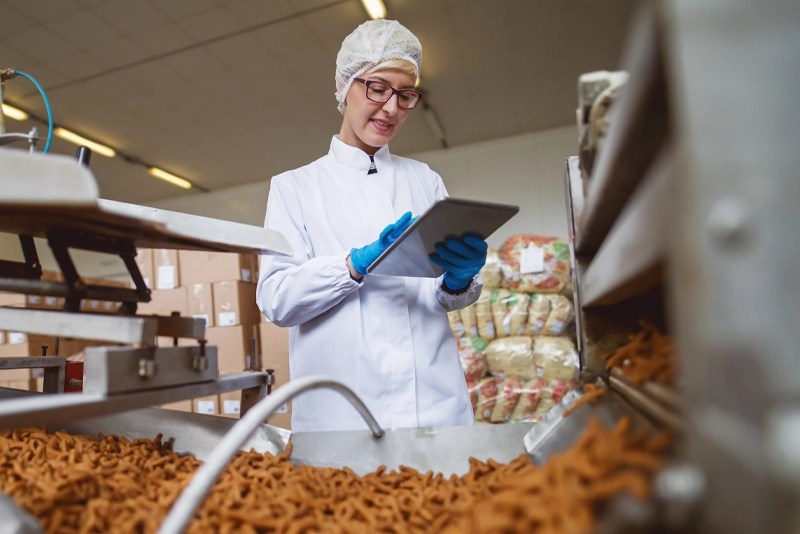
Why Food Science and Technology Careers Are Changing
The modern food system is more complex than ever. Global sourcing, faster product cycles, and always-on consumer expectations are pushing organizations to rethink how food is developed, manufactured, and scaled. The result is a field that increasingly rewards workers who can connect science, technology, operations, and innovation into practical, scalable solutions.
That shift is showing up in both workforce and workplace trends. At the plant level, food and beverage manufacturers report major investment in automation and digitalization. In a 2024 survey of more than 300 food and beverage manufacturers, 48% of capital spending was directed to automation projects, and 78% said they’re using automation to stay ahead of labor shortages. 2
Consumer expectations are changing just as quickly. The International Food Information Council’s long-running Food & Health Survey shows that purchase decisions are shaped by more than taste and price. In 2025, 57% of consumers said healthfulness impacts what they buy, and 27% said environmental sustainability plays a role (see PDF, page 26). 3
Broader consumer research also suggests people are increasingly trying to make “smarter” food choices, with PwC reporting two-thirds of consumers say they’re committed to buying only what they need to reduce food waste. 4
Key forces driving these changes include:
- Growth in Food Technology and Automation: Manufacturers are prioritizing automation and digital systems.
- Increased Use of Data to Manage Quality and Consistency: Digital integration is already present in many facilities.
- Rising Demand for Sustainable and Alternative Food Products: More consumers are actively trying to reduce food waste through purchasing habits.
- Greater Emphasis on Transparency and Traceability: Industry research continues to connect transparency to trust and purchasing behavior, especially in fresh categories where consumers associate the term “fresh” with health and sustainability.
- Faster Product Development Cycles: Consumer definitions of “healthy” continue to evolve, reinforcing why product innovation and reformulation work remains central.
Emerging Careers in Food Science and Technology
Not long ago, food science careers followed fairly predictable paths, such as lab work, quality assurance, product development, or regulatory roles. Today, those boundaries are blurring. New technologies, sustainability pressures, and faster innovation cycles are reshaping how food organizations operate — and what they expect from their hires.
For many, this means career growth is less about moving up a single track and more about expanding across systems. Employers increasingly value food scientists who understand how formulation connects to manufacturing, how data informs quality decisions, and how innovation moves from concept to scale. New industry roles below reflect that shift, combining strong food science foundations with technology, analytics, and cross-functional leadership.
Food Product Innovation Specialist
Food product innovation specialists are the people who turn a rough idea like “high protein,” “clean label,” or “better texture with less sugar” into something that can actually be produced at scale. Day to day, that work can include testing ingredient substitutions, running small-batch trials, evaluating flavor and texture through sensory testing, and collaborating with operations to ensure a formula performs consistently on the production line and remains stable throughout its shelf life.
This role is growing because product expectations continue to rise while development timelines get shorter. Consumers want foods that deliver on taste, nutrition, simplicity, and sustainability at the same time. Organizations need professionals who can move quickly while still protecting quality, consistency, cost targets, and manufacturability.
Career Outlook and Salary: These roles typically align with food scientist or food technologist classifications. According to ZipRecruiter estimates, median annual pay for agricultural and food scientists is $82,657, with higher earnings common in R&D-focused and senior innovation roles. 5
Skills That Matter
- Advanced formulation and ingredient functionality
- Sensory science and consumer testing
- Cross-functional collaboration with marketing and operations
Alternative Protein or Sustainable Food Scientist
These scientists are working on foods that barely existed a decade ago, or at least were not widely available to consumers. They help develop plant-based, fermentation-derived, and other novel products that need to deliver on the basics that matter to consumers: taste, texture, nutrition, and a price point that makes sense.
Day to day, that can look like testing protein performance, improving mouthfeel, refining flavor, validating how an ingredient behaves in processing, and working with sourcing teams to find ingredients that are consistent and scalable.
This career path is expanding because sustainability is no longer a side project. For many companies, it is tied directly to product strategy, brand positioning, and long-term resilience. As organizations invest in alternative proteins and more resource-efficient food systems, they need food scientists who can turn promising ideas into products that are viable in the real world and reliable at commercial scale.
Career Outlook and Salary: Compensation varies widely depending on specialization and organization size. According to ZipRecruiter, jobs in alternative protein development often align with senior R&D or specialized food science positions, where salaries may exceed $90,000 with experience. 6
Skills That Matter
- Protein chemistry and food structure
- Process scalability and texture optimization
- Applied research and innovation strategy
Food Data and Quality Systems Analyst
Food data and quality systems analysts are the people who make sense of what all that production data is actually telling you. They look at trends across batches, shifts, and facilities to spot issues early, understand why deviations happen, and help teams make adjustments before small problems turn into larger ones. Rather than relying only on checklists or manual inspections, they use digital quality systems to turn data into clear, practical decisions.
This role is growing as food manufacturing becomes more data-driven. Many facilities now collect far more information than they did even a few years ago. However, data only adds value when someone knows how to interpret it. Organizations are increasingly looking to hire candidates who understand food science well enough to connect numbers on a screen to real-world processes on the production floor.
Career Outlook and Salary: These roles often align with quality management, analytics, or operations-focused positions. According to ZipRecruiter, the annual salary for this role can exceed $100,000, depending on scope, responsibilities, and experience. 7
Skills That Matter
- Quality systems and data interpretation
- Process monitoring and trend analysis
- Systems thinking across production environments
Food Processing and Automation Technologist
Food processing and automation technologists help production lines run smarter, not just faster. They work on how food is processed, cooled, packaged, and scaled so the final product stays consistent from batch to batch. That might mean fine-tuning equipment settings, improving a processing step that causes variability, troubleshooting when product quality shifts, or partnering with engineering and QA to make sure automation changes still protect texture, taste, and overall performance.
This role is growing because manufacturers are investing heavily in automation to keep production moving in the face of labor shortages and efficiency demands. Food companies need those who can bridge two worlds. They have to understand how processing decisions affect the food itself, and they also need the technical confidence to work with equipment, controls, and modern manufacturing systems.
Career Outlook and Salary: These roles often map to technical leadership or operations-adjacent positions. Salaries commonly align with industrial or production management roles. PayScale reports an average annual salary within food manufacturing of $86,000, depending on responsibility level. 8
Skills That Matter
- Food processing and manufacturing systems
- Automation and equipment optimization
- Collaboration across engineering and QA teams
Supply Chain and Traceability Specialist
Supply chain and traceability specialists are the people who keep the story of a product straight from the moment an ingredient is sourced to the moment a finished item ships. They help ensure the right ingredients arrive on time, match specifications, and can be tracked accurately through production.
Day to day, that work can include reviewing supplier documentation, managing specifications, coordinating with procurement and quality teams, and using digital systems to maintain clear, reliable records across the supply chain.
This role is becoming more important because supply chains are more global, more fragmented, and more vulnerable to disruption than they used to be. Organizations need professionals who can connect food science details like ingredient functionality and quality requirements with the logistics and tracking systems that keep operations running smoothly and transparently.
Career Outlook and Salary: These roles often align with supply chain management or quality-focused positions, with compensation varying based on scope, industry segment, and responsibility level.
Skills That Matter
- Food system logistics and documentation
- Digital tracking and traceability platforms
- Cross-functional communication
Where Food Science and Technology Professionals Work
Food science and technology career-seekers work across a wide range of sectors, often moving between them as their careers progress. While job titles and responsibilities vary, the core skills developed through food science training translate well across academic, industry, government, and mission-driven organizations.
Understanding these sectors can help clarify where emerging roles fit within the food industry and how advanced training can support career growth.
Industry and Private Sector
The private sector remains the primary source of employment in food science. Roles span product development, processing, quality systems, supply chain coordination, and technology implementation within food and beverage companies of all sizes.
With faster innovation cycles, industry roles emphasize cross-functional work. Food scientists may collaborate with operations, engineering, marketing, and data teams to bring new products to market or improve existing systems. This sector often offers the most direct pathways to advancement into leadership, innovation, and management roles.
Academic and Research Organizations
Food science roles are also found in academic and research settings, supporting applied research, teaching, and industry collaboration. These roles help advance knowledge, improve food systems, and train the next generation of food science talent.
Some food scientists move into academia after gaining industry experience, while others work in research-focused roles that partner directly with private organizations. Advanced education is often essential for these career paths.
Government and Public Agencies
Federal, state, and local agencies offer food science roles tied to food systems oversight, research, nutrition programs, and agricultural support. These positions often focus on system-level impact and long-term planning rather than day-to-day production. Within the federal government, food science roles support programs related to food systems oversight, agricultural research, nutrition initiatives, and applied scientific technologies.
Some programs from the U.S. Department of Agriculture (USDA) include:
- The Food Safety and Inspection Service
- USDA Agricultural Research Service
- Women, Infants, and Children (WIC)
- USDA/ARS Children’s Nutrition Research Center
Careers in this sector may appeal to professionals interested in policy, research, or large-scale program management.
Nonprofit and International Organizations
Nonprofit and international organizations offer food science roles in areas such as food security, nutrition programs, sustainability initiatives, and technical assistance. These roles often combine scientific expertise with education, program development, or community engagement.
Work in this sector may span regions or cultures and often appeals to those who want to apply technical skills to mission-driven goals.
Skills and Advanced Training for Emerging Food Science Careers
Across today’s food science and technology roles, employers increasingly seek individuals with both technical expertise and strong problem-solving skills. The strongest candidates understand core food science fundamentals and can apply them across innovation, data-driven decision-making, processing environments, and system-wide improvement.
Key skills that support long-term growth include:
- Strong foundations in food science and technology
- Understanding of modern food processing systems
- Data literacy and systems thinking
- Cross-functional communication and collaboration
- Ability to adapt to new technologies and industry changes
Graduate-level education can help working adults deepen these skills while preparing for leadership and roles that span multiple teams. It is also a practical way to build confidence beyond entry-level technical work, especially for those aiming to move into roles with broader scope and responsibility as the industry continues to change.
Prepare for Emerging Food Science Careers With an Online Master’s Degree
Many of the food science careers highlighted in this article share a common theme. Moving into roles that span innovation, data-driven quality, processing systems, and leadership across teams often requires more than experience alone. They need deeper technical expertise, stronger systems thinking, and the ability to lead initiatives that improve how products are developed and produced.
That is where graduate education can make a practical difference. The online Master of Science in Family and Consumer Sciences: Food Science and Technology from NMSU Global Campus is designed for working professionals who want to build advanced, industry-relevant skills while remaining employed.
This career-focused master’s program emphasizes applied learning in areas such as food science, quality systems, and technology-driven processes that align with how the field is evolving.
As the food industry becomes more integrated, individuals with strong scientific foundations, technological fluency, and strategic thinking are well-positioned for long-term growth. If you are aiming to step into roles with greater influence across product development, quality leadership, processing, or operations, an advanced degree can help you stay competitive and prepare to lead what comes next.
References
1. “Occupational Outlook Handbook: Agricultural and Food Scientists.” U.S. Bureau of Labor Statistics, 28 August 2025.
2. “New report: Automation beyond food and beverage industry trends.” CRB, 2024, accessed 9 February 2026.
3. “2025 IFIC Food & Health Survey.” International Food Information Council (IFIC), 13 January 2026.
4. “PwC’s Voice of Consumer 2025: A new recipe for the food industry.” PwC, 10 June 2025.
5. “Food Product Development Scientist Salary.” ZipRecruiter, January 2026.
6. “Food Scientist Salary.” ZipRecruiter, last updated 9 January 2026.
7. “Food Analyst Salary.” ZipRecruiter, last updated 9 January 2026.
8. “Salary for Industry: Food Manufacturing.” PayScale, last updated 20 January 2026.
About New Mexico State University Global Campus

At NMSU Global Campus, our mission is to help prepare the next generation of leaders. We focus on offering high-quality education that spans a multitude of disciplines and career pathways. Whether you’re seeking a degree or certification in teaching, science, engineering, healthcare, business, or others, we provide exciting opportunities that can help shape your future.
New Mexico State University is accredited by the Higher Learning Commission, an institutional accreditation agency recognized by the U.S. Department of Education. Specialized accreditation from other accrediting agencies is also granted for some programs. We offer flexible, career-focused 100% online courses and degree options in New Mexico, across the nation, and around the globe. Start your journey with our accessible and affordable degree options.
Get Your Personalized Program Info
Recent Agriculture and Consumer Sciences Posts

Can a Master’s in Animal Science Help You Prepare for Veterinary School?
Preparing for veterinary school requires more than just meeting prerequisites. For students looking to strengthen their profile before applying to...
Read More about Can a Master’s in Animal Science Help You Prepare for Veterinary School?
Where a Master’s in Animal Science Can Take Your Career
Working with animals often means learning on the job. But an advanced degree in animal science helps you build deeper...
Read More about Where a Master’s in Animal Science Can Take Your Career
Hospitality or Business Administration: How to Choose the Right Management Degree
Two degrees. Two very different career environments. If you are deciding between hospitality leadership and general business management, this guide...
Read More about Hospitality or Business Administration: How to Choose the Right Management Degree