Special Education Licensure vs. Master’s Degree: What’s the Difference and Which Do You Need?
If you’re considering a career in special education, you’ll likely come across two common pathways: earning a teaching license or completing a master’s degree. This in-depth guide explores both options to help you choose the pathway that works best with your career goals.
Educators who want to support learners with diverse academic, behavioral, and developmental needs often face an early question: Do you need a teaching license, a graduate degree, or both? That question has become more urgent as demand for qualified special educators continues to grow across the United States and in New Mexico.
About 15% of public school students receive services under the Individuals with Disabilities Education Act (IDEA), a population that includes students with learning differences, developmental disabilities, and other qualifying disabilities. 1 In New Mexico, educators may also pursue preparation to support gifted learners who require advanced differentiation.
At the same time, school districts nationwide report persistent shortages of licensed educators prepared to serve learners with special needs, particularly in rural and high-need communities.
Understanding the difference between special education licensure and a master’s degree can help clarify which path aligns with your career goals and your current credentials. While the two options are closely related, they serve different purposes. This guide explains how each pathway works, what New Mexico requires, and how to choose the option that best fits where you are now and where you want to go.
Ready to begin your journey in special education teaching?
Earn your online Master of Arts in Special Education at NMSU Global Campus. We also offer an online alternative licensure option for special education teachers.

Prepare to Qualify for Special Education Licensure
If your goal is to work directly with students as a special education teacher, licensure is the credential that makes that possible. In New Mexico, you must hold a valid special education teaching license from the New Mexico Public Education Department (NMPED) to serve as the teacher of record in a public or charter school. 2
A master’s in special education prepares you to support learners across a wide range of abilities. This includes students with learning disabilities, developmental delays, behavioral needs, and gifted learners who require differentiated instruction and individualized learning plans.
Special education licensure typically focuses on:
Meeting Legal Requirements for Classroom Teaching
Before a school can place you in front of students as the teacher responsible for instruction, the state needs to verify that you have the right professional preparation. Licensure confirms you have met standards for pedagogy, content knowledge, and supervised classroom experience. Without it, you cannot serve as the teacher of record in public schools, regardless of degree level.
Developing Foundational Instructional Competence
Teacher preparation programs are designed to help you move from knowing about inclusive teaching to actually doing it in real classrooms. As a special education teacher, you’ll be responsible for adapting instruction to meet highly individualized student needs.
Licensure programs focus on building foundational skills and competencies, such as:
- Designing and implementing individualized education programs (IEPs)
- Planning instruction across different strengths, needs, and learning profiles
- Monitoring student progress and adjusting support in real time
- Collaborating with families and service providers so students aren’t navigating school systems alone
You’ll also build an understanding of how services are delivered and documented, because individualized planning and progress monitoring are part of day-to-day practice, not just paperwork.
Licensure programs that build these competencies are more important than ever, especially in New Mexico. The 2024 New Mexico Educator Vacancy Report found 280 vacancies for special education teachers, representing 38 percent of all teacher vacancies in the state as of September 2024. 3 When you choose to earn your special education licensure, you’re preparing to step into this work with practical tools for instruction, collaboration, and compliance, not just good intentions.
Completing State-Approved Assessments and Field Experience
To qualify for licensure in New Mexico, candidates typically complete a state-approved preparation program, supervised field experience or student teaching, and required assessments. Specific steps vary depending on your background, especially if you are entering teaching from another field.
Alternative licensure pathways are designed specifically for career changers or paraprofessionals who want to transition into special education teaching while completing these requirements.
Deepen Your Impact With a Master’s Degree in Special Education
A master’s degree in special education is designed to deepen your expertise and expand your career opportunities. Some MA in Special Education pathways are designed to help students prepare for New Mexico special education licensure. Others are intended for educators who already hold a license or are not seeking a new one. In every case, candidates who want to teach in a New Mexico public school must meet licensure requirements through the New Mexico Public Education Department (NMPED).
A master’s degree focuses on advancing your instructional knowledge, strengthening your impact in the classroom, and preparing you for broader roles in education. At the graduate level, coursework can move beyond foundational teaching skills and into evidence-based practices, advanced instructional strategies, and collaboration and leadership skills that support inclusive learning environments.
A master’s degree typically supports educators who want to:
Strengthen Your Expertise in Inclusive and Individualized Instruction
Graduate-level coursework builds on your existing teaching knowledge by focusing on how to better support diverse learners in real-world settings. This often includes advanced study in differentiated instruction, assessment design, behavior intervention strategies, and collaboration with multidisciplinary teams.
You’ll also explore how to apply evidence-based practices to meet the needs of students with learning disabilities, developmental differences, and behavioral challenges while supporting inclusive classrooms that serve a wide range of learners.
Expand Your Career and Leadership Opportunities
A master’s degree can open the door to roles that extend beyond traditional classroom teaching. Educators with graduate training may pursue positions such as instructional coach, curriculum specialist, intervention coordinator, or special education lead within a school or district.
These roles often involve mentoring other teachers, shaping instructional practices, or helping schools implement more effective support systems for students with diverse needs.
Read more about the career paths and job opportunities for educators with a master’s in special education. 4
Prepare for Long-Term Professional Growth
For educators planning to build a long-term career in education, a master’s degree provides a foundation for continued advancement and specialization. This may include moving into administrative roles, pursuing certifications in areas like educational leadership or behavior analysis, or continuing on to a doctoral program.
In many school districts, a graduate degree may also support salary advancement or expanded responsibilities. However, it’s important to note that while a master’s degree can enhance your qualifications, it does not replace state licensure requirements for classroom teaching.
Find Your Place at NMSU
If you’re considering NMSU Global Campus, we’ll help you explore online programs.
Connect with us today!
Compare Special Education Licensure and a Master’s Degree Side by Side
If you are trying to decide which path you need, it helps to separate two questions that often get blended together:
- Am I eligible to teach in a New Mexico public or charter school classroom as the teacher of record?
- Do I want additional graduate-level preparation that can expand my expertise and long-term options?
Licensure answers the first question. A master’s degree supports the second.
Here is the simplest way to compare the two:
- Primary purpose: Licensure confirms eligibility to teach under state rules. A master’s degree builds advanced knowledge and professional depth.
- Who it is for: Licensure is for individuals who need authorization to teach. A master’s degree is often pursued by educators who want to strengthen their practice, specialize, or expand career pathways.
- Who sets requirements: Licensure requirements are set by the state. Master’s degree requirements are set by the institution and may align with state competencies.
- What it prepares you to do: Licensure prepares you to begin teaching and meet classroom responsibilities. A master’s degree prepares you to refine instruction, support a wider range of learners, and step into roles with more responsibility.
- What it changes immediately: Licensure changes whether you can legally hold a public school classroom position. A master’s degree does not automatically change teaching eligibility, but it can strengthen your qualifications and support your advancement depending on district policies.
When you look at it this way, the choice often becomes clearer. If you need to become eligible to teach in New Mexico, licensure is the nonnegotiable step. If you are already licensed or you want deeper preparation and flexibility over time, a master’s degree may be the better next move, or something you pursue alongside an approved licensure pathway.
Decide if Licensure Alone Is Enough for Your Goals
For some educators, the most practical next step is earning licensure first. If your primary goal is to become eligible to teach in a New Mexico public or charter school classroom, licensure is the credential that clears that hurdle. A master’s degree can add depth and flexibility later, but it is not always the fastest or most necessary starting point.
Licensure alone is often the right fit when you are focused on entering the classroom and building experience before committing to graduate-level study. This pathway commonly makes sense for individuals who:
- Are entering teaching for the first time and need a clear route to classroom eligibility
- Already hold a bachelor’s degree in another field and want to shift into education
- Need to meet licensure requirements quickly to pursue a specific role or hiring timeline
- Plan to begin teaching first and pursue a master’s degree after gaining classroom experience
Licensure-focused programs typically emphasize classroom readiness, including supervised field experiences, instructional planning, and the state requirements that govern teaching roles. For many educators, that foundation is the most immediate and practical move, especially when the goal is to start teaching while continuing to build skills over time.
Explore the online Special Education: Alternative Licensure Graduate Certificate at NMSU Global Campus.
Determine if a Master’s Degree Is the Right Next Step
A master’s degree can be the next move when you are thinking beyond classroom eligibility and focusing on how you want to grow as an educator.
For licensed teachers, a master’s degree is less about checking a box and more about building deeper skill in areas that show up every day in real schools. For educators who are not yet licensed, pairing graduate study with an approved licensure pathway can also provide a more cohesive experience, as your coursework and fieldwork can reinforce one another.
This option often aligns with professionals who:
- Are already licensed teachers and want to add specialized preparation that strengthens their practice
- Want to serve a broader range of learners, including students who need intensive support and gifted learners who benefit from advanced differentiation
- Are drawn to roles with wider influence, such as instructional coaching, coordination, family support, mentoring, or advocacy-focused work
- Plan to build a long-term career in education and want credentials that support growth, flexibility, and leadership over time
It is also common for educators to take this in stages. Some earn licensure, teach for a few years, and return for a master’s degree once they have a clearer sense of the learners and settings they want to serve. Others choose an integrated pathway that allows them to work toward licensure while completing graduate-level study, which can be especially practical for professionals balancing work, family, and long-term goals.
Earn your Master of Arts in Special Education online at NMSU Global Campus.
Understand Combined Pathways in New Mexico
For individuals who need licensure and want a graduate degree, these programs can provide an efficient and cohesive route. Combined pathways typically offer:
- Alignment with New Mexico Public Education Department (NMPED) standards
- Graduate-level coursework that supports licensure competencies
- Supervised field experiences embedded into the program
- Flexible online formats designed for educators balancing work and study
Advance Your Special Education Teaching Career at NMSU Global Campus
NMSU Global Campus offers flexible, online pathways designed to meet you where you are, whether you’re working toward licensure or advancing your expertise in special education.
If your goal is to become a licensed special education teacher in New Mexico, the Special Education Alternative Licensure Graduate Certificate provides a direct, state-approved route. Built for individuals who already hold a bachelor’s degree and have secured a conditional teaching position, this program combines online coursework with hands-on classroom experience, personalized mentorship, and supervised observations to help you build confidence and meet licensure requirements.
If you’re looking to deepen your knowledge or expand your career opportunities in education, the Master of Arts in Special Education is a flexible, fully online program with multiple pathways, including options that prepare students for New Mexico special education licensure and options designed for current educators who want to deepen their expertise.
Whether you’re pursuing initial licensure or focusing on advanced instructional practice, this program allows you to tailor your studies while building expertise in inclusive, evidence-based teaching.
Explore the Special Education Graduate Certificate and the Master of Arts in Special Education at NMSU Global Campus and take the next step in your teaching career.
References
1. “Students with Disabilities.” National Center for Education Statistics, last updated May 2024.
2. “New Mexico Teaching Licensure.” NMPED, accessed 28 May 2026.
3. Boren, R. “2024 New Mexico Educator Vacancy Report.” SOAR: Southwest Outreach Academic Research Evaluation & Policy Center at NMSU, 10 October 2024.
4. “Explore a List of Career Paths and Jobs for a Master’s in Special Education.” NMSU Global Campus Blog, 1 April 2024.
About New Mexico State University Global Campus
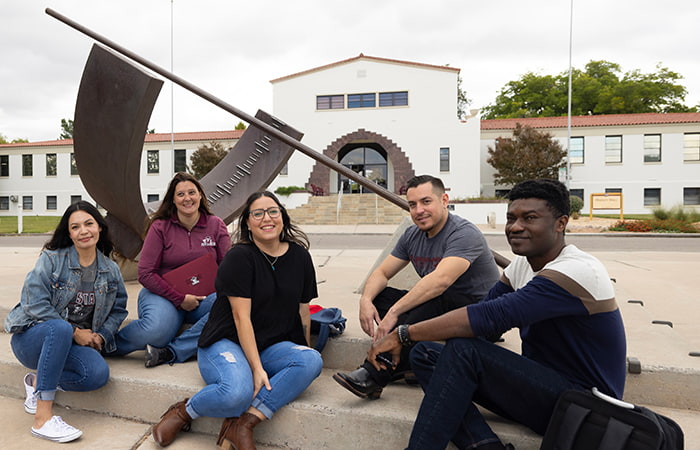
At NMSU Global Campus, our mission is to help prepare the next generation of leaders. We focus on offering high-quality education that spans a multitude of disciplines and career pathways. Whether you’re seeking a degree or certification in teaching, science, engineering, healthcare, business, or others, we provide exciting opportunities that can help shape your future.
New Mexico State University is accredited by the Higher Learning Commission, an institutional accreditation agency recognized by the U.S. Department of Education. Specialized accreditation from other accrediting agencies is also granted for some programs. We offer flexible, career-focused 100% online courses and degree options in New Mexico, across the nation, and around the globe. Start your journey with our accessible and affordable degree options.
Get Your Personalized Program Info
Recent Education Posts

Careers in Higher Education Leadership: Pathways for Future Academic Leaders
Explore career pathways in higher education leadership and the skills needed to guide strategy, support students, and shape institutional success....
Read More about Careers in Higher Education Leadership: Pathways for Future Academic Leaders
How a Master’s in Special Education Supports Career Growth and Leadership
An online master’s in special education can help educators deepen their expertise, expand their leadership opportunities, and strengthen their ability...
Read More about How a Master’s in Special Education Supports Career Growth and Leadership
How Special Education Is Changing: Key Trends Shaping Classrooms Today
Special education is changing fast, and educators are being asked to do more than deliver accommodations. From inclusion and intervention...
Read More about How Special Education Is Changing: Key Trends Shaping Classrooms Today