What Can You Do with a Master’s in Music Education?
You’ve spent years learning what works in the classroom. A master’s in music education can help you deepen those skills, tackle new challenges, and decide what you want to do next.

You know your students. You know your repertoire. You know how to run a rehearsal and what to try when something isn’t working. But after a few years in the music classroom, you may start asking different questions.
How could you reach more students or take on more responsibility? And what about graduate school? Is a master’s in music education worth it at this point in your career?
Graduate study gives experienced music teachers a chance to take a closer look at their practice. Some of the notable benefits of a master’s in music education can be the opportunities to explore new approaches and dig into topics that matter most to you as an educator.
In this article, we’ll explore six ways a master’s in music education can support your professional growth, with insights from faculty members in the Department of Music at New Mexico State University.
We’ll also cover some factors you can consider when deciding on a master’s program, including what online study looks like in the Master of Music in Music Education program at NMSU Global Campus.
“The students in our online program have already learned those foundational skills. They are already teaching. They have ensembles they’re working with, so the master’s program provides an opportunity for meaningful professional development.”
Fred Bugbee, D.M.A, Department Head and Professor of Music at NMSU
So, what can you do with a master’s in music education? From strengthening your classroom practice to advancing your musicianship, leadership, or professional licensure, there are numerous possibilities.
1. Build Confidence for Music Program Leadership
You may be ready to have a bigger say in your music program. A master’s in music education can help you develop the knowledge and confidence to take on more responsibility and contribute to the direction of how music is taught at your school.
What that can look like for a music teacher:
- Help shape your school’s music education curriculum or program
- Lead a new ensemble, performance initiative, or program project
- Collaborate with colleagues to solve instructional or program challenges
Build skills to help you get there:
- Leadership and decision-making
- Program planning and development
- Collaboration and communication
- Research and critical analysis
At NMSU Global Campus, the online Master of Music in Music Education program includes graduate study in music education, current issues in the field, and research methods. You’ll examine challenges facing music educators in different settings and learn to use research and evidence to make more informed decisions about your teaching and music program.
“We focus on what is happening in today’s classrooms and schools. The program addresses topics like diversity in the classroom while also building a strong foundation in music history and theory.”
Fred Bugbee, D.M.A, Department Head and Professor of Music at NMSU
2. Expand Your Music Education Skills
You already have strategies that work. Graduate study can give you a bigger toolkit to draw from. A master’s in music education can help you develop new music education skills for different learners, backgrounds, and teaching situations.
What that can look like for a music teacher:
- Adapt instruction for students with different needs and experiences
- Rethink how you approach a lesson, rehearsal or assessment
- Apply culturally responsive approaches to your music classroom
Build skills to help you get there:
- Curriculum development and assessment
- Culturally responsive teaching
- Understanding diverse learners
The online Master of Music in Music Education program at NMSU Global Campus gives you opportunities to explore advanced approaches to teaching music and supporting diverse learners. You’ll also take a closer look at your own practice — what’s working, who isn’t being reached, and what you might do differently — to make more thoughtful instructional decisions.
“Faculty in our program often design assignments that allow students to videotape themselves conducting ensembles or running rehearsals in their schools. They can then submit those recordings and receive feedback on how the rehearsal is going and what’s happening in the classroom.”
Fred Bugbee, D.M.A, Department Head and Professor of Music at NMSU
3. Keep Pace with Changing Music Technology
Your students are using new tools to create, practice, and discover music. While organizations like the National Association for Music Education (NAfME) have identified artificial intelligence (AI) as a development with the potential to significantly affect music education. 1 A master’s degree can give you more context for understanding these changes and thinking through how they may fit into your teaching.
What that can look like for a music teacher:
- Evaluate a digital music tool before introducing it to students
- Consider how emerging technologies could change how students create or practice music
- Adapt instruction as the tools students use continue to evolve
Build skills to help you get there:
- Digital literacy
- Critical evaluation
- Adaptability
NMSU’s online master’s in music education examines evolving approaches to music instruction and emerging issues in the field. This gives you a foundation for thinking critically about new technologies and making purposeful decisions about when to use them in teaching and learning.
“Technology, coupled with societal challenges, has changed the teaching field substantially over the past decade. Our degree is designed to meet these challenges, with a greater focus on the social-emotional needs of our students and the opportunity to see music as a way to develop the artistic self.”
Steven Smyth, D.M.A, Associate Director of Bands and Associate Professor of Music at NMSU
4. Deepen Your Musicianship and Music Expertise
With a master’s in music education, you can deepen your understanding of music itself, too. Graduate study can give you the opportunity to strengthen your knowledge of music theory, history, performance, and pedagogy, and then bring that deeper understanding back into your rehearsals, lessons, and curriculum.
What that can look like for a music teacher:
- Analyzing music with greater depth and confidence
- Making stronger connections between repertoire, music history, and your teaching
- Developing a deeper understanding of how music is taught, learned, and experienced
Build skills to help you get there:
- Advanced music theory
- Music history and analysis
- Music pedagogy
- Musical interpretation
- Conducting and rehearsal techniques
For a practicing music teacher, this combination matters. The better you understand the music and the way it can be taught, the more you have to offer your students.
The music education curriculum for the online Master of Music in Music Education at NMSU Global Campus gives you opportunities to deepen your understanding of harmony, music theory, music history, and literature while continuing to develop your music education practice. You can connect that deeper musical knowledge to the work of teaching, interpreting, and making music with your students.
“Most musicians are familiar with the term ‘chops.’ This idea that a musician’s technical and musical ability should go beyond what they are asked to do in a typical performance. I believe that teaching ‘chops’ is the depth of knowledge that a teacher has on a subject that reaches beyond the curriculum. In the master’s degree, students review and expand their previous knowledge of music theory and musicology.”
Steven Smyth, D.M.A, Associate Director of Bands and Associate Professor of Music at NMSU
5. Explore the Questions That Matter to Your Teaching
You probably have encountered questions in your teaching that don’t seem to have easy answers. A master’s in music education can give you the research skills and academic structure to stop guessing, investigate the question, and make decisions based on evidence.
What that can look like for a music teacher:
- Analyze why a particular teaching approach is or isn’t working
- Design curriculum around a specific need in your school community
- Develop a research or applied project focused on your music program
Build skills to help you get there:
- Research design
- Academic writing
- Critical thinking
- Data and evidence analysis
Instead of simply asking what other educators are doing, you can learn how to evaluate why an approach may work and whether it makes sense for your students. That practical focus aligns with CAEP’s standards for educator preparation, which emphasize opportunities to identify and address problems of practice involving PreK–12 students. 2
As part of the online master’s in music education program at NMSU Global Campus, you’ll learn to evaluate research, interpret findings, and consider what the evidence means for your own practice. You can also pursue a thesis or applied project connected to a question or professional interest that matters to you.
“The structure of our master’s curriculum gives current educators the freedom to customize their studies around their own interests and situations. We encourage students to choose practical topics for their projects that can have a direct impact on their classrooms and then share that knowledge through their work toward the degree.”
Steven Smyth, D.M.A, Associate Director of Bands and Associate Professor of Music at NMSU
6. Advance Your Teacher Licensure
The last item on the list of what you can do with a master’s in music education has to do with advancing your teaching credentials. For some music teachers, graduate school is about the next level of their teaching license. In some districts, that can also affect where you fall on the salary schedule.
Depending on your state and current license, a master’s degree may help you meet requirements for a higher-level or advanced teaching license. Teachers in New Mexico can advance through a three-level licensure system, and a master’s degree can be part of the pathway to a Level 3A license. 3
On the financial side, the latest National Center for Education Statistics (NCES) data show that full-time public school teachers with a master’s degree earned around $14,500 more per year than teachers whose highest degree was a bachelor’s. 4 That’s an average, not a guaranteed raise or a prediction of what you’ll earn. But it is worth checking your own state requirements and school district salary schedule.
Together, these six areas show the range of ways graduate study can support different paths within a music teaching career. But the most important benefits of a master’s in music education can look different from one teacher to the next. So what are some good questions to ask to evaluate how well the degree fits the work you want to do and the direction you want to take next?
Is a Master’s in Music Education Worth It?
The benefits of a master’s in music education are ultimately tied to what you want to get from the degree. Maybe you want to become a stronger teacher, take on more responsibility, deepen your musicianship, or advance professionally.
Consider graduate study in music education if you:
- Want to strengthen your teaching. You’re looking for more advanced approaches to instruction, curriculum, assessment, or student learning.
- Plan to go deeper into music education. You’re interested in research, pedagogy, musicianship, technology, or current issues affecting the field.
- Are ready for greater responsibility. You want to contribute to music education curriculum decisions, mentor colleagues, or take on a larger role in your music program.
- Are thinking about professional advancement. You’re exploring opportunities that may value or require a graduate degree, including higher teacher licensure levels or salary advancement, depending on your state and school district.
If that sounds like where you are, don’t stop at the degree title when comparing programs. Look closely at what you’ll actually study in the music education curriculum, how the program fits around your teaching career, and whether the coursework will help you solve problems you’re facing in your classroom or music program now.
Research the music education curriculum
Take a look at what you’ll actually learn and what you can focus on in the program. Whether that’s advanced teaching methods, research, technology, leadership, musicianship, or a combination of these.
The right graduate program should build the music education skills you can actually use in your classroom and music program.
Consider how the degree fits your teaching career
If you plan to keep teaching while you earn your degree, the format matters. Online, hybrid, and on-campus programs can each make different demands on your time, so consider when you’ll attend class and whether the schedule fits your school-year responsibilities.
A program can be academically strong and still be the wrong fit if you can’t realistically make it work alongside your teaching job. That’s where the flexible, online master’s in music education at NMSU Global Campus can be a real game-changer for busy educators.
Check how the degree fits your licensure or salary goals
If professional advancement is part of your plan, check your state and district requirements before choosing a program. A master’s degree does not automatically move you to a higher teaching license or salary level, and the way a degree applies can vary by state, credential, and employer.
Spend a few minutes checking those requirements to help you choose a degree that actually supports the next step you want to take in your career as a music teacher.
Look for opportunities to apply what you learn
Coursework, a research project, or thesis shouldn’t feel like busy work. Look at what you’ll actually produce and whether you can connect it to a question, challenge, or area of interest in your own teaching practice.
The more directly you can apply your graduate work, the more useful the degree can be while you’re earning it, not just after you graduate.
“The structure of our master’s curriculum gives current educators the freedom to customize their studies around their own interests and situations. We encourage students to choose practical topics for their projects that can have a direct impact on their classrooms and then share that knowledge through their work toward the degree.”
Steven Smyth, D.M.A, Associate Director of Bands and Associate Professor of Music at NMSU
Pay attention to accreditation and academic quality
Accreditation can help you understand whether a university and its programs meet established standards for academic quality. Look at both the institution’s accreditation and any specialized accreditation relevant to the music program.
If you may eventually pursue doctoral study, it’s especially useful to understand how the master’s program will prepare you for that next level of academic work.
New Mexico State University is accredited by the Higher Learning Commission (HLC) and the National Association of Schools of Music (NASM). NMSU’s music education master’s program has been delivered online since 2007. Our expert music faculty has years of experience designing, teaching, and refining online coursework for music educators.
Related: Considering an online master’s while you continue teaching? Read more about what academic quality looks like in an online degree in the NMSU Global Campus Blog. 5
So, is a master’s in music education worth it for a working teacher? It can be, especially when the degree connects directly to the work you want to do in your classroom, your music program, or your career.
Earn Your Master’s in Music Education Online at NMSU
What can you do with a master’s in music education? Quite a lot. And if you’re a licensed K–12 music teacher who wants to keep teaching while building deeper expertise, NMSU Global Campus offers a flexible and affordable way to do both.
The 100% online Master of Music in Music Education brings together advanced music study, pedagogy, research, technology, musicianship, and the realities of today’s music classroom. You can pursue the areas that matter most to your work and choose a thesis or applied project that lets you dig into a question or challenge you genuinely care about.
If you’re ready to deepen your practice while continuing to teach, explore the online music education master’s program and start the next chapter in music education.
“Knowledge is power. If we encourage our students to be lifelong learners, shouldn’t we be role models? I received my undergraduate degree in music education more than 27 years ago, and I believe teaching has changed immensely. This degree is a great chance for an experienced educator to step back and become current with the newest research and methods in the classroom. As musicians, we also benefit from a step back into the fundamentals of music that remind us why we entered the field in the first place.”
Steven Smyth, D.M.A, Associate Director of Bands and Associate Professor of Music at NMSU
Find Your Place at NMSU Global Campus
Apply now to the online Master of Music in Music Education at NMSU Global Campus.
Our online application process takes only about 10 to 15 minutes, and your first application is free. 6
FAQ: Master of Music in Music Education
What do you learn in a master’s in music education program?
The exact curriculum varies among music education graduate programs, but graduate study commonly brings together advanced teaching methods, curriculum and instruction, research, technology, leadership, and musicianship.
For a working music teacher, that can mean looking more closely at the questions you encounter every day: Why isn’t this approach working for this student? How could I rethink this curriculum? Where does a new technology actually belong in my classroom? Graduate study gives you the tools to investigate those questions. Explore the online Master of Music in Music Education at NMSU Global Campus.
Can you earn a master’s in music education while teaching full-time?
Yes, you can. Many working teachers choose graduate programs with online and part-time options so they can continue to teach while they study.
There’s also a practical advantage to earning your music education master’s online while you teach: your classroom becomes part of the learning process. You can take an idea from your coursework into your next rehearsal or lesson, see how it works with your students, and bring those real-world experiences back to your graduate studies.
Does a master’s in music education lead to teacher licensure?
It depends on the program and the type of teacher licensure you need. Some graduate programs combine a degree or certificate with initial teacher preparation and student teaching for people who are not yet licensed. If you’re not yet licensed, look specifically for a master’s program that includes an initial teacher licensure or certification pathway in the state where you plan to teach. Graduate degrees and certificates for teachers are available online at NMSU Global Campus.
Other music education graduate programs are designed for already-licensed teachers and may support advancement to a higher-level license or credential. The online Master of Music: Music Education at NMSU Global Campus is designed for licensed K–12 music teachers.
Related: Find out about the requirements to become a teacher in New Mexico in the NMSU Global Campus Blog. 7
How much does a master’s in music education cost?
The cost of an online master’s in music education varies by university, number of credits, tuition rate, fees, and other program expenses. When comparing music education graduate programs, look at the total cost of the tuition and check whether the program has additional fees or requirements.
At NMSU Global Campus, the 31-credit Master of Music in Music Education is currently $444.40 per credit, for $13,776.40 in total tuition. A working teacher taking 6 credits per semester would pay about $2,666.40 in tuition that semester, before any applicable fees or financial aid.
The cost of an online master’s in music education at NMSU Global Campus is about 70% less than the total average cost of $44,640 for master’s in education programs nationwide. 8
What are the admission requirements for a master’s in music education?
Admission requirements vary, but music education master’s programs commonly ask for a bachelor’s degree in music or music education, transcripts, a minimum GPA, a résumé or CV, recommendations, and a personal statement.
Some programs may also request a teaching license, a brief teaching or conducting video, or a writing sample.
See what you need to apply. Review the admission requirements for the Online Master’s in Music Education at NMSU Global Campus.
How long does it take to get a master’s in music education?
It’s common for a master’s in music education program to take around 2 years to complete full-time. Working teachers may choose a flexible, part-time pace that takes a little longer. For a 31-credit program, taking about 6 credits (roughly two classes) per semester could mean about 2.5 to 3 years, depending on course availability, summer enrollment, and how you schedule your thesis or applied project.
References
1. “Resources: Artificial Intelligence and Music Education.” National Association for Music Education (NAfME), accessed 12 August 2026.
2. “CAEP Initial-Licensure Level Standards.” Council for the Accreditation of Educator Preparation (CAEP), accessed 12 August 2026.
3. “Teacher License Advancement.” New Mexico Public Education Department accessed 12 August 2026.
4. “Characteristics of Public School Teachers.” U.S. Department of Education’s National Center for Education Statistics (NCES), retrieved 12 August 2026.
5. “What Academic Quality Looks Like in an Online Degree at NMSU Global Campus.” NMSU Global Campus Blog, 30 April 2026.
6. “3 Easy Tips to Help You Complete Your Application to NMSU Global Campus.” NMSU Global Campus Blog, 10 July 2026.
7. “Becoming a Teacher: Degree Requirements and Teacher Certification Guide.” NMSU Global Campus Blog, 9 September 2024.
8. Hanson, M. “Average Cost of a Master’s Degree: 2026 Analysis.” Education Data Initiative, last updated 12 May 2026.
Quotes from our interviews with faculty members from NMSU’s online Master of Music in Music Education program have been lightly edited for clarity.
About New Mexico State University Global Campus
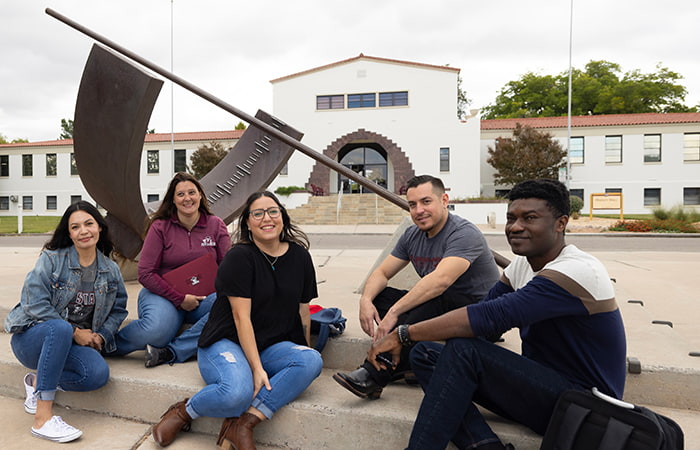
At NMSU Global Campus, our mission is to help prepare the next generation of leaders. We focus on offering high-quality education that spans a multitude of disciplines and career pathways. Whether you’re seeking a degree or certification in teaching, science, engineering, healthcare, business, or others, we provide exciting opportunities that can help shape your future.
New Mexico State University is accredited by the Higher Learning Commission, an institutional accreditation agency recognized by the U.S. Department of Education. Specialized accreditation from other accrediting agencies is also granted for some programs. We offer flexible, career-focused 100% online courses and degree options in New Mexico, across the nation, and around the globe. Start your journey with our accessible and affordable degree options.
Get Your Personalized Program Info
Recent Education Posts

How to Become a Teacher in New Mexico: Your 2027 Guide
Becoming a teacher in New Mexico starts with understanding the degree and licensure requirements. In this guide, we explore pathways...
Read More about How to Become a Teacher in New Mexico: Your 2027 Guide
Should You Add a School Social Work Graduate Certificate to Your MSW?
Choosing an MSW specialization is an important decision. This guide will help you explore whether school social work training aligns with the work you...
Read More about Should You Add a School Social Work Graduate Certificate to Your MSW?
Special Education Licensure vs. Master’s Degree: What’s the Difference and Which Do You Need?
If you’re considering a career in special education, you’ll likely come across two common pathways: earning a teaching license or...
Read More about Special Education Licensure vs. Master’s Degree: What’s the Difference and Which Do You Need?