Can You Take Online and On-Campus Classes at the Same Time?
Wondering if you can take online and on-campus classes at the same time? This guide explains how colleges handle mixed enrollment, what to ask before you register, and how fully online programs at NMSU Global Campus support flexible degree progress.
Data from the National Center for Education Statistics shows that about 54% of enrolled students have taken at least one distance course in recent years, which highlights how common online learning is today. 1 With that growth, it’s natural for prospective students to wonder whether they can mix online and traditional, on-campus courses to fit changing schedules, relocations, or life transitions.
Some students want flexibility from the start. Others begin in one format and later consider moving to another. Understanding how enrollment policies work before applying can help you avoid surprises and choose the right path from the outset.
The short answer is that it is sometimes possible to enroll in both online and on-campus programs, but this depends on the institution, the degree program, and the degree’s structure.
Explore 90+ Fully Online Programs at NMSU Global Campus.

Can You Enroll in Online and On-Campus College Programs at the Same Time?
Colleges and universities set their own policies around how online and in-person courses are offered and combined.
Some higher ed institutions allow students to mix online and on-campus classes within the same term. Others treat online and traditional programs as completely separate tracks, even if the degree title is the same.
Whether you can enroll in both formats typically depends on whether:
- The degree program is structured with required course formats.
- Online and on-campus programs are managed separately by the institution.
- Accreditation and academic policies limit how formats can be combined.
- Tuition, fees, and financial aid rules differ by delivery format.
Enrollment rules can vary widely, even within the same institution. The sections below explain what “online” and “traditional” typically mean, why some schools restrict mixing formats, and what to ask before you register.
Looking for more information on financial aid? Learn how financial aid at NMSU Global Campus works before you apply. 2
The Difference Between Online and Traditional Programs
Before comparing options, it helps to understand how colleges typically define online and traditional enrollment.
Online degree programs are built to be completed fully online. Courses are often asynchronous, meaning you complete coursework on your own schedule rather than attending live class sessions. This format is designed for flexibility and is common for working adults, military-connected students, and learners balancing other responsibilities.
Traditional degree programs are primarily campus-based. Courses meet in person on a set schedule and usually require students to be physically present for lectures, labs, or group work. This format is more structured and often follows a semester-based timetable.
Some institutions also offer hybrid or blended programs, which intentionally combine online and in-person coursework within a single degree program. In these cases, the mix of formats is part of the program design rather than something students arrange on their own.
In other cases, colleges may offer both online and in-person course options within the same program without formally labeling it as hybrid. This can give students more flexibility to choose how they complete individual courses, depending on availability and program guidelines.
It’s also important to clarify what students mean when they ask about enrolling in both formats. Some ask whether they can take an occasional online course while enrolled in an on-campus program. Others ask whether they can complete part of a degree online and part on-campus. Colleges often treat these situations differently.
Taking Online and In-Person Classes at the Same Time
Whether or not you can take online and in-person classes at the same time depends on the institution. At NMSU Global Campus, degree programs are intentionally designed to be fully online. This structure is made to support flexibility, consistency, and clarity for working adults and other non-traditional learners. Students interested in mixing online and on-campus courses at NMSU should confirm options with their academic advisor before registering.
At some colleges, you may be allowed to mix online and in-person courses during the same term. This typically happens when:
- The institution permits cross-enrollment between online and on-campus programs or offers both online and in-person course options within the same program.
- Tuition and fee structures are the same across formats.
- Academic calendars align.
- Advising and registration systems are built to support mixed enrollment.
Even when these conditions exist, mixing formats can create complications. Differences in billing, financial aid eligibility, course scheduling, and academic policies can make degree planning more complex than expected.
Why Colleges May Limit Mixing Online and Traditional Courses
When a college or university limits mixed online/on-campus enrollment, it is usually about logistics and policy, not a lack of flexibility. Online and on-campus programs often operate as different systems, and combining them can create confusion about cost, scheduling, and degree progress.
Here are the most common reasons schools may restrict mixing learning formats:
Tuition and fee differences
Online and on-campus programs may have different tuition rates, technology fees, student service fees, or campus-based fees. Explore tuition costs at NMSU Global Campus and get all your financial aid questions answered here.
Program and accreditation requirements
Some programs are approved as fully online or primarily face-to-face. If a program is structured around a specific course delivery format, there may be limits on how many courses can be taken in another format without affecting program compliance.
Different advising and student support systems
Online and on-campus students may have different advising teams, registration processes, tutoring access, or support services. Mixing formats can create gaps in guidance, especially when it comes to course sequencing and degree planning.
Different academic calendars and course pacing
Online terms may follow accelerated schedules, while on-campus programs often follow traditional semesters. Even when the course content is similar, misaligned calendars can cause start-date conflicts, deadline issues, or problems with full-time status.
Understanding these constraints helps explain why policies vary by school and why it is worth confirming rules early. This is especially true if you are trying to protect your timeline and avoid unexpected costs.
Is online college the right move for you? The NMSU Global Campus Blog offers these 5 tips to thrive while earning your online degree. 3
Find Your Place at NMSU
If you’re considering NMSU Global Campus, we’ll help you explore online programs.
Connect with us today!
FAQ: What to Ask Before Enrolling
If you are considering online, on-campus, or mixed enrollment, a few targeted questions can quickly reveal whether your plan is realistic and whether it will support steady degree progress.
Use these frequently asked questions to get clarity before you register:
Can I take online and in-person courses during the same term, and are there limits?
Some schools allow it only for electives, only within certain majors, or only with academic advisor approval.
Will the courses apply to my degree plan the way I expect?
It’s best to confirm whether online courses meet the same requirements as on-campus courses, especially for major courses, prerequisites, labs, or clinical components.
How will tuition, fees and billing work if I mix formats?
Ask whether your tuition rate changes, whether additional fees apply and whether you will be charged campus fees if you take even one in-person course.
Who will help me plan my schedule and degree path?
Confirm whether you will have one advisor or multiple points of contact, and who has final authority on your degree plan if you cross online/on-campus formats. At NMSU Global Campus, your personal Graduation Team is available to help with your questions every step of the way.
Will mixing formats affect financial aid or education benefits?
Ask how mixed enrollment impacts full-time status, Satisfactory Academic Progress, employer tuition reimbursement, and military education benefits such as Tuition Assistance or VA benefits. 4
Getting clear answers now can save you time, protect your budget, and reduce the risk of delays caused by credit misalignment or benefit eligibility issues.
Choose the Right Enrollment Path for Your Situation
The best enrollment path is the one that supports steady progress without adding unnecessary friction. Instead of starting with format preferences alone, it helps to think about what you need to keep moving forward term after term.
Online programs are often a strong fit if you:
- Want consistent access to coursework regardless of location or travel
- Need more control over when and where you study during the week
- Prefer a format designed for working adults and others with nontraditional schedules
Traditional on-campus programs may be a good fit if you:
- Learn best through in-person discussion and structured class meetings
- Need hands-on access to facilities such as labs, studios, or specialized equipment
- Want campus-based activities and services to be part of your college experience
If you think your situation could change, such as relocating, changing work schedules, or transitioning out of military service, plan ahead. Ask how course formats affect transfer credit, degree requirements, and enrollment status, so you can avoid repeating courses or extending your timeline.
For a deeper look at how online learning supports flexibility, access, and long-term planning, the NMSU Global Campus Blog offers a free guide to the benefits of earning your degree through an online college. 5
Confirm the Details Before You Commit to Online College
Policies vary by higher ed institution, program, and degree structure. The differences can affect everything from course availability to tuition, financial aid, and time to completion.
Before you register for classes or commit to a program of study, verify how enrollment formats work for your specific degree. This step can help you avoid unexpected costs and stay on track toward graduation.
How NMSU Global Campus Approaches Online Learning
NMSU Global Campus offers 90+ fully online programs so you can plan your education around work, family, military service, or geographic location without commuting to campus or managing conflicting course formats.
Some programs may include limited in-person components, such as an initial orientation or required proctored exams, but the overall structure is designed to remain flexible and accessible for online learners.
By offering our degree and certificate programs fully online, NMSU Global Campus helps you:
- Follow a clear and consistent degree path without format-related barriers.
- Avoid scheduling conflicts tied to fixed class meeting times.
- Maintain progress even when life circumstances change.
- Access coursework from anywhere without relocation or travel requirements.
- Plan tuition, financial aid and timelines more predictably.
This approach is especially valuable for students who need flexibility without sacrificing structure or academic quality. Rather than asking you to navigate multiple delivery systems, NMSU Global Campus designs programs so the entire degree experience works within one cohesive format.
While it may sound appealing to combine online and in-person courses, fully online programs can be easier to navigate when you’re balancing work and adult responsibilities. When all courses follow the same delivery model, expectations are clearer, advising is simpler, and progress is easier to maintain from term to term.
Are you ready for the next step?
Choose from 90+ online degree and certificate programs at NMSU Global Campus. Start your application today.
Our online application process takes only about 10 to 15 minutes, and your first application is free. 6
References
1. “Digest of Education Statistics.” National Center for Education Statistics, December 2024.
2. “Financial Aid at NMSU Global Campus: What You Need to Know Before You Apply.” NMSU Global Campus Blog, 30 October 2025.
3. “5 Tips to Thrive in Online College.” NMSU Global Campus Blog, 16 September 2024.
4. “Satisfactory Academic Progress.” NMSU Global Campus Academic Catalog, accessed 5 May 2026.
5. “Benefits of Online College — Earn Your Degree Online.” NMSU Global Campus Blog, 14 May 2024.
6. “3 Easy Tips to Help You Complete Your Application to NMSU Global Campus.” NMSU Global Campus Blog, 9 June 2025.
About New Mexico State University Global Campus
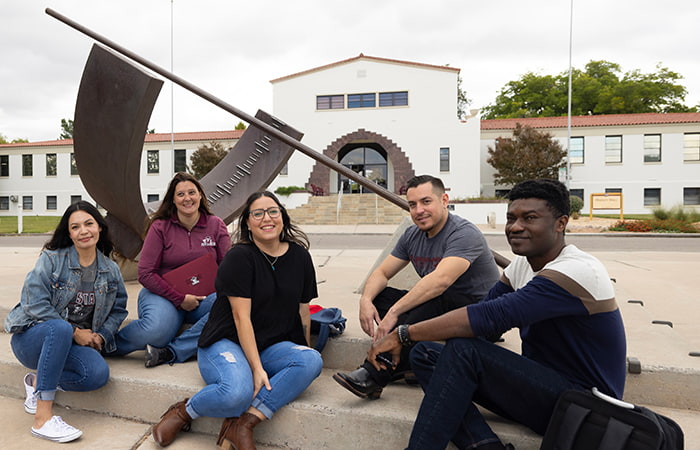
At NMSU Global Campus, our mission is to help prepare the next generation of leaders. We focus on offering high-quality education that spans a multitude of disciplines and career pathways. Whether you’re seeking a degree or certification in teaching, science, engineering, healthcare, business, or others, we provide exciting opportunities that can help shape your future.
New Mexico State University is accredited by the Higher Learning Commission, an institutional accreditation agency recognized by the U.S. Department of Education. Specialized accreditation from other accrediting agencies is also granted for some programs. We offer flexible, career-focused 100% online courses and degree options in New Mexico, across the nation, and around the globe. Start your journey with our accessible and affordable degree options.
Get Your Personalized Program Info
Recent General Posts
Community College vs. University: What’s the Difference?
Should you go to community college or a 4-year university? Compare the costs, degree options, and benefits of each to...
Read More about Community College vs. University: What’s the Difference?
Careers for Bilingual Spanish Speakers: 15 Jobs Where Spanish Is a Professional Advantage
Knowing both Spanish and English is a valuable skill you can bring to many workplaces. From business to technology jobs,...
Read More about Careers for Bilingual Spanish Speakers: 15 Jobs Where Spanish Is a Professional Advantage
Your 2027 Guide to Completing the FAFSA Form | NMSU Global Campus
Navigating the college financial aid landscape can feel like traversing a maze with no clear exit. For students at New...
Read More about Your 2027 Guide to Completing the FAFSA Form | NMSU Global Campus
Finish Your Degree: How to Affordably Complete Your Bachelor’s Online
You don’t need to put your life on hold or break the bank to graduate with a quality college education....
Read More about Finish Your Degree: How to Affordably Complete Your Bachelor’s Online