Building Career Versatility With an Applied Studies Degree
Returning to school can be a smart next step, not a reset. For many adults, it’s a chance to finish strong with a degree that values what you’ve already earned and supports flexibility as jobs and industries change.
Many working adults come back to college because they want options. A Bachelor of Applied Studies is designed for students who have already earned an Associate of Applied Science (AAS) degree and want to build on that technical or career-focused education with a bachelor’s credential.
Maybe you are ready to move up, pivot into a new role, or simply stop hitting the same “degree required” barrier. This flexible degree path can help you make forward progress without forcing you into a one-size-fits-all major.
For adults balancing work, family, and everything else, online learning can be the difference between “someday” and an actual plan. NMSU Global Campus supports that kind of momentum with flexible online coursework and 90+ online degree offerings. Students can also apply transfer credits and, if eligible, earn credit for prior learning through a formal review.
The market incentive is real. Over time, household income tends to rise more for people with higher levels of education. For example, median household income for those with at least a bachelor’s degree increased by about $15,000 (13.1%), compared with about $3,500 (10.4%) for those with less than a high school diploma. 1 While the percentage increases were not significantly different, the dollar gains were much larger for bachelor’s degree holders.
Explore how an online Bachelor of Applied Studies (BAS) can help you advance your career.

Understand What an Applied Studies Degree Offers
An applied studies degree is designed for students who have already completed an Associate of Applied Science (AAS) degree and want to continue their education at the bachelor’s level.
Many AAS programs focus on technical or applied fields, and some of those specialized credits do not always transfer easily into traditional bachelor’s programs. The BAS degree allows those credits to count toward a four-year degree while giving students the flexibility to complete additional coursework aligned with their goals.
Applied studies may be a good fit if you’ve started college before, have credits from multiple institutions, or want your prior learning to count. It’s also a strong option if your career direction is changing and you want a degree plan that can adapt.
Explore Key Areas of Study Within Applied Studies
Applied studies programs often combine coursework from multiple disciplines to help students build a practical, well-rounded skill set. Common focus areas include:
- Professional communication for workplace writing, presentations, and collaboration.
- Critical thinking and problem solving to evaluate information and make sound decisions.
- Organizational leadership and team dynamics to support effective teamwork and people management.
- Project coordination and applied workplace practices to plan, execute, and improve day-to-day work.
- Interdisciplinary coursework selected to align with your professional goals.
Together, these areas help students strengthen skills they can use right away and stay prepared as their responsibilities or career direction evolve.
See How an Applied Studies Degree Builds Career Versatility
One of the biggest advantages of an applied studies bachelor’s degree is the balance it offers. You get broad preparation without a degree plan that feels scattered. Rather than being locked into a narrow major, you can build around skills employers consistently value and that apply across industries.
That flexibility also makes it easier to shape your coursework around what comes next. You might focus on leadership and communication to move up in your current field, add coursework that supports a career change, or combine learning from multiple areas so you can pursue more than one direction.
For many adult learners, versatility is not just about having more options. It is about qualifying for roles that require a bachelor’s degree, showing a clear academic plan connected to your goals, and building skills you can carry into new responsibilities.
If you want a closer look at what the BAS degree can lead to, explore common career paths for applied studies graduates. 2
Discover Skills That Transfer Across Industries
A Bachelor of Applied Studies is built around skills you will use no matter where you work. Even if you change industries, most jobs still come down to communicating clearly, working well with others, solving problems, and keeping projects on track. That is why these fundamentals tend to show up in job descriptions again and again.
In an applied studies program, you can strengthen skills such as:
- Written and interpersonal communication
- Leadership and team collaboration
- Time management and project coordination
- Problem solving and decision making
- Adaptability in dynamic work environments
If you have ever felt like you could do more at work but needed a stronger credential or more confidence in these areas, this is where applied studies can add real momentum. These competencies can apply across many sectors, including business, public service, education, customer support, nonprofit work, and operations.
Explore Career Paths Supported by an Applied Studies Degree
Because the BAS degree is flexible, outcomes often depend on what you bring with you and where you want to go next. For some learners, applied studies is a way to move into leadership in a field they already know. For others, it is a way to pivot by pairing your previous experience with new coursework that supports a different direction.
Examples of job titles graduates may pursue include:
Operations and Management Pathway
- Operations manager
- Assistant operations director
- General manager (retail or service setting)
- Administrative services manager
- Program manager
Project and Organizational Coordination
- Project manager
- Project coordinator
- Program coordinator
- Business operations analyst
People and Organizational Support
- Human resources specialist
- Training and development coordinator
- Talent development specialist
- Community program specialist
- Client success manager
Because an applied studies degree often integrates business, communication, and organizational coursework, many BAS graduates move into roles where they oversee teams, manage workflows, support strategic initiatives, or coordinate multi-department projects.
Long-term advancement depends on experience and industry, but the degree is frequently used as a stepping stone toward leadership positions that require both practical knowledge and broad organizational awareness.
Learn How Prior Learning and Transfer Credits Strengthen Your Degree
If you are coming back to school with credits already earned, you should not have to start from scratch. For the BAS, students enter with an Associate of Applied Science (AAS) degree and often bring 60 or more credits. They still complete general education requirements and finish a minimum of 120 total credits overall, including 36 upper-division credits of their choosing.
A helpful next step is a transfer credit evaluation. Once your transcripts are reviewed, you get a clearer picture of what can apply, what requirements remain, and what your completion plan could look like. That clarity makes it much easier to plan for time, cost, and workload.
Want to maximize your transfer credits? Request info to connect with an advisor about applying your prior college coursework to the BAS degree.
Make the Most of Transfer Credits
One of the advantages of the BAS pathway is that it builds directly on an Associate of Applied Science (AAS) degree. Students who transfer from community colleges or technical programs often bring a significant number of college credits with them, sometimes 60 or more. These credits can apply toward the overall 120-credit requirement while students complete general education and upper-division coursework needed for the bachelor’s degree.
Use Prior Learning Assessment to Earn Credit for Experience
Some students may also be able to receive credit for prior learning, depending on the type of learning and current university review processes. Military experience aligned with ACE recommendations may be one example of prior learning that can be evaluated.
Prior learning credit is not automatic, and eligibility depends on documentation and institutional review. When available, it can be a helpful way to recognize relevant learning and focus on the coursework still needed to complete your degree.
Want to see how this works in practice? See how transfer credits and prior learning options at NMSU Global Campus can help you complete your degree more efficiently. 3
How Is Applied Studies Different From a Traditional Major?
A traditional major is usually designed around a single discipline, with a defined sequence of courses that may build toward one professional identity. That structure can be a great fit if you know exactly what you want to do and your previous credits line up cleanly with the plan.
Applied studies tends to work differently. The BAS degree is built for adults whose education and career history are already in motion. Instead of asking you to fit your background into one narrow track, the degree is often shaped around a clear purpose: helping you finish with a coherent bachelor’s credential that matches where you are headed next.
For many learners, the advantage of a BAS is not just flexibility, but fit. You can build an academic plan that makes sense alongside your real-life responsibilities and an evolving career, rather than feeling boxed in by course requirements that do not connect to your goals.
How Can Applied Studies Support Career Growth?
Applied studies can be especially useful when you are trying to move forward without changing everything about your life. It gives you a way to strengthen the skills employers routinely screen for, while also making your experience easier to explain on a resume and in interviews.
For example, the BAS degree can help you:
- Show a clear academic through-line that supports your next step, even if your credits and experience come from multiple places.
- Build confidence when presenting ideas, leading conversations, and collaborating with different teams.
- Strengthen planning and execution habits that matter as you step into greater responsibility.
- Position yourself for roles that require a bachelor’s degree for eligibility, even when the job is not tied to one specific major.
- Adjust your coursework as your goals sharpen, whether that means leaning toward leadership, operations, public service, or another direction.
The end result is a degree that can support upward movement now while still leaving room to adapt later. That’s often exactly what adult learners need.
See How NMSU Global Campus Supports Applied Studies Students
If you have already earned an Associate of Applied Science (AAS) degree and want to continue toward a bachelor’s credential, the details matter — especially how your previous credits will apply and how flexible the program structure is. The online Bachelor of Applied Studies (BAS) at NMSU Global Campus is designed for adult learners who need an online option that respects your prior learning and supports steady progress to graduation.
Here is what our BAS students can expect:
- Fully online coursework that can fit around work and family responsibilities
- Advising support to help you build a clear, goal-based plan of study
- Transfer-friendly credit review to help you apply eligible coursework efficiently
- Faculty and coursework that connect learning to real workplace situations
- Online support services, including tutoring and writing help
If you are looking for a bachelor’s degree-completion path that is flexible, practical, and built around the experience you already bring, the BAS can help you move forward with confidence. Your timeline will depend on how many eligible credits you bring in and how many courses you take each term, but the goal is the same: a clear plan that helps you finish.
References
1. Scherer, Z, King, M. “How Education Impacted Income and Earnings from 2004 to 2024.” United States Census Bureau, 9 September 2025.
2. “Career Paths for Applied Studies Graduates.” NMSU Global Campus Blog, 4 December 2025.
3. “A Clear Path to Transfer Your College Credits to an Online Program.” NMSU Global Campus Blog, 8 December 2025.
About New Mexico State University Global Campus
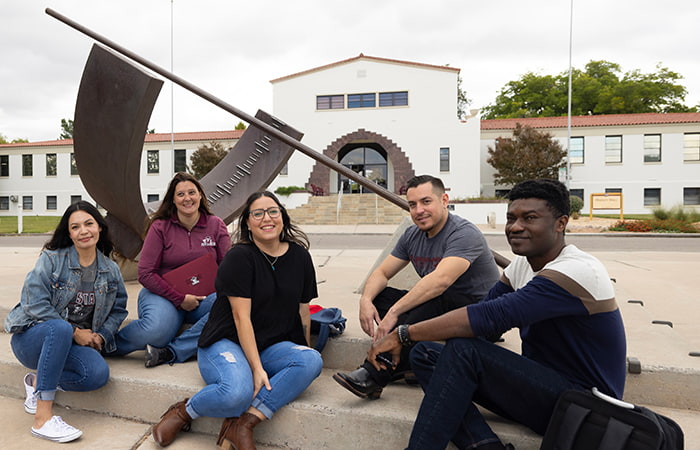
At NMSU Global Campus, our mission is to help prepare the next generation of leaders. We focus on offering high-quality education that spans a multitude of disciplines and career pathways. Whether you’re seeking a degree or certification in teaching, science, engineering, healthcare, business, or others, we provide exciting opportunities that can help shape your future.
New Mexico State University is accredited by the Higher Learning Commission, an institutional accreditation agency recognized by the U.S. Department of Education. Specialized accreditation from other accrediting agencies is also granted for some programs. We offer flexible, career-focused 100% online courses and degree options in New Mexico, across the nation, and around the globe. Start your journey with our accessible and affordable degree options.
Get Your Personalized Program Info
Recent Sciences Posts

Why a Master’s in Data Analytics is a Strong Career Transition
Changing careers does not have to mean starting over. Data analytics is one of the most flexible paths for adult...
Read More about Why a Master’s in Data Analytics is a Strong Career Transition
Top Careers with a Bachelor’s in Kinesiology You May Not Have Considered
If you’re considering a bachelor’s in kinesiology, you might wonder: Where can this degree actually take me? The truth is,...
Read More about Top Careers with a Bachelor’s in Kinesiology You May Not Have Considered