High-Paying Healthcare Jobs Without Medical School: 2027 Guide
Want a well-paying job in healthcare without becoming a doctor? From specialized clinical and technology roles to leadership positions, there are many career paths worth exploring. NMSU Global Campus offers a variety of online degree programs to help you prepare for your next step.
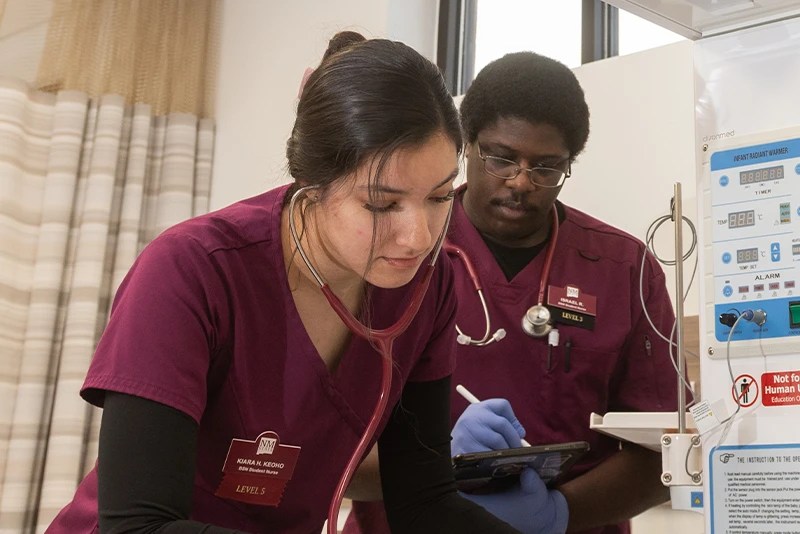
Physicians are one part of a much larger, in-demand healthcare workforce. The U.S. Bureau of Labor Statistics projects about 1.9 million openings every year across healthcare occupations from 2025 to 2035. 1 Healthcare professionals’ median yearly wage is also nearly 70% higher than the median for all professions.
Healthcare a growing field where you can work in many settings and roles. Each career has its own unique education requirements, too. That means there are a lot of interesting paths you can pursue toward the highest-paying medical jobs.
This guide compares non-physician healthcare careers, including typical pay, education requirements, and projected job growth. It also explains how to evaluate your options and where a 100% online degree or certificate from New Mexico State University Global Campus may fit into your plans.
What Can You Do in Healthcare Without Becoming a Doctor?
Healthcare includes many well-paying careers beyond becoming a medical doctor. You can work directly with patients to help diagnose and treat health conditions. Or you can support healthcare through technology, administration, and other roles.
Clinical vs. Non-Clinical Healthcare Careers
Clinical professionals work directly with patients. They may provide or support diagnosis, treatment, rehabilitation, and care. Examples include allied health, surgical and diagnostic services, and advanced nursing roles. Non-clinical professionals support healthcare through areas such as administration, health information technology, analytics, and public health.
Both paths offer ways to work in healthcare without becoming a physician. Consider whether you prefer direct patient contact, technical work, data, or organizational responsibilities when comparing roles.
Healthcare Education Paths Besides Medical School
You can qualify for some well-paying healthcare careers with focused training after earning your high school diploma or a GED. Others require a 2- or 4-year college degree, and some call for advanced study. Depending on the role, you may also need relevant work experience, professional certification, or a state license.
Common healthcare education paths include:
- Certificate or other postsecondary training
- Associate degree
- Bachelor’s degree
- Master’s degree
- Doctoral or professional degree
A doctoral or professional degree doesn’t necessarily mean medical school. Some careers also require professional certification or state licensure, either alongside a degree or after completing additional training. Healthcare is a field that offers many ways to enter and contribute.
Find Your Place at NMSU
If you’re considering NMSU Global Campus, we’ll help you explore online programs.
Connect with us today!
What Are the Highest-Paying Medical Jobs Without Being a Doctor?
The highest-paying medical jobs without becoming a doctor span several areas of healthcare. You might prefer hands-on patient care or working with specialized technology. Perhaps you’d rather analyze data or manage people and operations.
These areas offer different paths into healthcare without going to medical school:
- Advanced nursing
- Allied health
- Diagnostics and medical technology
- Healthcare administration and IT
- Surgical and clinical care
Within each area, you’ll find roles with different responsibilities, qualifications, and earning potential. The profiles below break down what each job involves, what it typically pays, how fast demand is growing, and what it takes to qualify.
Medical Jobs That Pay Well With an Associate Degree
An associate degree can open the door to some very well-paying healthcare careers. These programs typically take about two years to complete, though the timeline can vary with program requirements, your course load, and clinical training.
Surgical Technologist
Surgical technologists prepare operating rooms and maintain sterile equipment. They assist surgical teams during procedures in hospitals and outpatient surgical centers. A postsecondary certificate or associate degree is typical. Some professionals pursue additional training or certification to qualify for specialized responsibilities.
Quick Facts for Surgical Technologists
- Typical requirements: Postsecondary certificate or associate degree
- Median annual pay: $64,700 per year
- Job growth: 5% (Faster than average)
Physical Therapist Assistant
Physical therapist assistants help patients regain strength, movement, and function under the direction of a physical therapist. They often work in clinics, hospitals, and rehabilitation facilities. An associate degree from an accredited program is typical, followed by licensure or certification. Work experience can help prepare you for specialized clinical responsibilities.
Quick Facts for Physical Therapist Assistants
- Typical requirements: Associate degree; licensure or certification
- Median annual pay: $61,200 per year
- Job growth: 17% (Much faster than average)
Cardiovascular Technologist
Cardiovascular technologists perform diagnostic tests. They assist with procedures involving the heart and blood vessels. Their typical work settings are hospitals, laboratories, and physicians’ offices. An associate degree or postsecondary certificate is common. Some roles will ask for additional certification or specialization.
Quick Facts for Cardiovascular Technologists
- Typical requirements: Associate degree or postsecondary certificate
- Median annual pay: $74,310 per year
- Job growth: 4% (As fast as average)
Health Information Technologist
Health information technologists maintain electronic health records and support information systems. They ensure healthcare data is accurate and useful. An associate or bachelor’s degree in information technology or health information is typical for entry into this role. You can also specialize in health data, information systems, privacy, or compliance.
Quick Facts for Health Information Technologists
- Typical requirements: Associate degree; requirements vary by position
- Median annual pay: $68,020 per year
- Job growth: 16% (Much faster than average)
Medical Jobs That Pay Well With a Bachelor’s Degree
A bachelor’s degree can also qualify you for some well-paying healthcare careers. These programs typically take about four years to complete, though the timeline can vary based on factors like the program you choose and how many classes you take each term. Depending on the occupation and program, you might also need additional training or supervised clinical experience.
Clinical Laboratory Technologist
Clinical laboratory professionals analyze blood, tissue, and other samples. They often work in hospitals, diagnostic laboratories, and medical facilities. Technicians may be able to get started through an associate degree or other approved preparation. Moving up to technologist roles often requires a bachelor’s degree.
Quick Facts for Clinical Laboratory Technologists
- Typical requirements: Bachelor’s degree for technologist roles
- Median annual pay: $62,930 per year
- Job growth: 3% (As fast as average)
Medical Dosimetrist
Medical dosimetrists develop treatment plans for patients receiving radiation therapy. They work with radiation oncologists and medical physicists in cancer treatment centers. The typical route includes a bachelor’s degree and specialized medical dosimetry education. Some employers prefer or even require certification.
Quick Facts for Medical Dosimetrists
- Typical requirements: Bachelor’s degree plus specialized training
- Median annual pay: $147,470 per year
- Job growth: 5% (Faster than average)
Dietitian or Nutritionist
Dietitians and nutritionists help people manage health conditions and improve their health through food and nutrition. They can work in hospitals, clinics, community programs, and private practice. Dietitians typically need a bachelor’s or master’s degree in dietetic sciences. They also typically complete supervised training and licensure requirements. Requirements vary by role and state.
Quick Facts for Dietitians and Nutritionists
- Typical requirements: Bachelor’s or master’s degree; supervised training and applicable credentials
- Median annual pay: $76,400 per year
- Job growth: 8% (Much faster than average)
Health Services Manager
Medical and health services managers oversee healthcare operations. That includes staffing, budgets, and compliance in hospitals, clinics, and other organizations. A bachelor’s degree in healthcare administration, nursing, business, or a related field is typical, and employers often look for experience in a clinical or administrative role in a healthcare setting. Graduate education, such as an MBA in Health Services Management, and leadership experience can help prepare managers for more senior positions.
Quick Facts for Health Services Managers
- Typical requirements: Bachelor’s degree; relevant experience
- Median annual pay: $123,860 per year
- Job growth: 24% (Much faster than average)
Medical Jobs That Pay Well With a Graduate Degree
Some well-paying healthcare careers require a graduate degree after a bachelor’s degree. Timelines vary by occupation and program, particularly when clinical training or professional licensure is required. Although these paths include advanced study and some have clinical training, they do not require the medical school and residency route used to train physicians.
Speech-Language Pathologist
Speech-language pathologists assess and treat communication and swallowing disorders. They can find jobs in schools, hospitals, rehabilitation centers, and private practices. The typical path includes a relevant undergraduate degree, such as a bachelor’s degree in communication disorders, followed by a master’s degree and state licensure.
Quick Facts for Speech-Language Pathologists
- Typical requirements: Master’s degree; state licensure
- Median annual pay: $97,870 per year
- Job growth: 17% (Much faster than average)
Physician Assistant
Physician assistants examine patients and diagnose conditions. They may develop treatment plans and prescribe medication within their scope of practice. They work in clinics, hospitals, and other healthcare settings. PAs have opportunities to specialize in areas such as emergency medicine, surgery, or primary care. The career requires a master’s degree and state licensure. It’s typical to start with a healthcare-related undergraduate degree, such as a bachelor’s degree in kinesiology.
Quick Facts for Physician Assistants
- Typical requirements: Master’s degree; state licensure
- Median annual pay: $135,880 per year
- Job growth: 21% (Much faster than average)
Chief Nursing Officer
Chief nursing officers lead nursing operations and help oversee staffing. They can help with patient safety and clinical strategy in hospitals and healthcare organizations. This is generally a senior leadership position after substantial nursing and management experience. CNOs often have a graduate education such as a Master of Science in Nursing (MSN) or Doctor of Nursing Practice (DNP).
Quick Facts for Chief Nursing Officer
- Typical requirements: A graduate nursing degree and substantial leadership experience
- Average annual pay: $152,547 per year
- Job growth: 24% for Medical and Health Services Managers (Much faster than average)
Psychiatric Mental Health Nurse Practitioner
Psychiatric-mental health nurse practitioners assess and treat mental health conditions. They usually work in hospitals, outpatient clinics, and private practices. Many begin as registered nurses before completing advanced nursing education. To move into this role, they typically need a master’s degree or higher, such as a Doctor of Nursing Practice (DNP) or a post-master’s certificate in psychiatric mental health. To practice, nurse practitioners must also pass a national certification exam and meet their state’s licensing requirements.
Quick Facts for Psychiatric Mental Health Nurse Practitioners
- Typical requirements: Graduate nursing degree; certification and state licensure
- Median annual pay: $134,920 per year
- Job growth: 36% (Much faster than average)
The careers above offer different combinations of pay, education, and day-to-day work. If you’re thinking about pursuing a non-physician healthcare career, consider how to narrow them down to ones that fit your priorities.
How Do You Choose the Right Healthcare Career?
A high salary is one reason to consider a healthcare career, but it’s worth comparing what each role requires and what the work is actually like. These factors can help you navigate your options.
- Day-to-day responsibilities: Do you want to provide hands-on patient care, perform diagnostic testing, work with medical technology, manage healthcare services, or focus on public health?
- Education and qualifications: How much time and money can you invest in training? Would you be willing to complete professional certification, state license, or supervised clinical experience?
- Work environment and schedule: Would you prefer a hospital, clinic, laboratory, office, or community setting? Consider patient contact, shift work vs. a nine-to-five, and other workplace demands.
- Earning potential and advancement: Compare median annual pay and projected job growth, along with opportunities to specialize or move into more senior roles.
Choosing a good career path isn’t necessarily the one where you can earn the most money. Make sure the work environment, education requirements, and long-term opportunities also make sense for you.
What to Know About Non-Physician Healthcare Careers
Non-physician healthcare careers span clinical care, medical technology, health information, administration, and more. They offer different combinations of pay, training requirements, patient contact, and responsibility. Understanding these differences can help you find well-paying healthcare jobs that fit your interests and goals.
A Healthcare Career Doesn’t Have to Mean Working Directly With Patients
Not every healthcare professional treats patients one-on-one. Information specialists track medical records, and healthcare managers oversee services and operations. Public health professionals work with communities to prevent disease and improve health. These careers contribute to healthcare without the direct patient contact of clinical roles.
Jobs in the Medical Field That Pay Well Don’t Always Require Medical School
Some healthcare careers with six-figure median pay don’t require you to go through medical school or a graduate degree program. For example, nuclear medicine technologists and radiation therapists can earn more than $100,000 each year. 2, 3 These are both careers where you typically only need an associate degree or other specialized preparation.
You can also qualify for other high-paying medical careers with a bachelor’s or master’s degree. Medical dosimetrists and physician assistants can earn six-figure salaries without becoming a physician. 4, 5
Non-Physician Healthcare Jobs Aren’t Necessarily Easier Than Physician Roles
If you’re searching for easy medical jobs that pay well, consider what “easy” means to you. A role with less schooling may still involve long shifts, technical precision, emotional demands, or significant responsibility for patient safety.
Instead of asking which well-paying medical jobs are easy, try asking:
- Am I OK with how long I’ll need to train?
- How much direct patient care do I want?
- Do I want a regular schedule or am I comfortable with shifts?
- How much responsibility do I want to carry?
- Do I want to keep advancing after my first healthcare job?
Frequently Asked Questions
Which Non-Physician Healthcare Careers Pay the Most?
Some of the highest-paying options include physician assistants (PAs), advanced practice nursing roles, medical dosimetrists, and healthcare management. The Bureau of Labor Statistics reports median annual wages of $134,920 per year for nurse practitioners and $147,470 for medical dosimetrists. 6, 7
What Medical Jobs With Little or No Schooling Can You Get?
If your priority is getting into healthcare quickly, there are roles you can get straight out of high school, sometimes with additional training, certification, or licensing. If you’re looking for high-paying medical jobs with little schooling, consider whether a 2-year degree could be the better middle ground. They can offer stronger earning potential.
Medical jobs with little schooling that typically require a high school diploma, training, and/or certification:
- Phlebotomist: $45,230 per year
- Pharmacy Technician: $45,750 per year
- Dental Assistant: $48,070 per year
- Emergency Medical Technician: $48,150 per year
Medical jobs with little schooling that typically require an associate degree:
- Respiratory Therapists: $82,280 per year
- Diagnostic Medical Sonographers: $96,590 per year
- Nuclear Medicine Technologists: $101,370 per year
- Radiation Therapists: $105,310 per year
What Healthcare Jobs Have Little or No Patient Interaction?
Not everyone who works in healthcare needs to work directly with patients. If you’re more interested in data, technology, organization, or community-wide health, these career areas may be worth exploring:
- Health Information Technology
- Healthcare Administration
- Health Services Management
- Healthcare Analytics
- Medical Coding and Records
- Public Health
Find Your Healthcare Career Path at NMSU Global Campus
Whether you’re preparing for your first healthcare role, building on your current experience, or working toward a leadership position, the right degree can help you take a practical next step.
If you’re ready to explore your options, New Mexico State University Global Campus offers 90+ bachelor’s, master’s, and doctoral degrees, as well as graduate certificates. With flexible, 100% online options, you can pursue your career goals in healthcare while balancing work and other responsibilities.
Explore NMSU’s online programs or connect with our admissions team for guidance on choosing a program that fits your healthcare interests and career goals.
References
1. “Occupational Outlook Handbook: Healthcare Occupations.” U.S. Bureau of Labor Statistics, last updated 27 August 2026.
2. “Occupational Outlook Handbook: Nuclear Medicine Technologists.” U.S. Bureau of Labor Statistics, last updated 27 August 2026.
3. “Occupational Outlook Handbook: Radiation Therapists.” U.S. Bureau of Labor Statistics, last updated 27 August 2026.
4. “Occupational Outlook Handbook: Medical Dosimetrists.” U.S. Bureau of Labor Statistics, last updated 27 August 2026.
5. “Occupational Outlook Handbook: Physician Assistants.” U.S. Bureau of Labor Statistics, last updated 27 August 2026.
6. “Occupational Outlook Handbook: Nurse Anesthetists, Nurse Midwives, and Nurse Practitioners.” U.S. Bureau of Labor Statistics, last updated 27 August 2026.
7. “Occupational Outlook Handbook: Medical Dosimetrists.” U.S. Bureau of Labor Statistics, last updated 27 August 2026.
About New Mexico State University Global Campus

At NMSU Global Campus, our mission is to help prepare the next generation of leaders. We focus on offering high-quality education that spans a multitude of disciplines and career pathways. Whether you’re seeking a degree or certification in teaching, science, engineering, healthcare, business, or others, we provide exciting opportunities that can help shape your future.
New Mexico State University is accredited by the Higher Learning Commission, an institutional accreditation agency recognized by the U.S. Department of Education. Specialized accreditation from other accrediting agencies is also granted for some programs. We offer flexible, career-focused 100% online courses and degree options in New Mexico, across the nation, and around the globe. Start your journey with our accessible and affordable degree options.
Get Your Personalized Program Info
Recent Healthcare Posts

DNP Degree Careers: Leadership and Clinical Paths Explained
Wondering what you can do with a DNP degree? This career guide explores opportunities for a Doctor of Nursing Practice...
Read More about DNP Degree Careers: Leadership and Clinical Paths Explained
MPH Program Skills: What You Learn and Where They Lead
An MPH can open the door to a wide range of career opportunities, including analyzing health data, shaping public policy,...
Read More about MPH Program Skills: What You Learn and Where They Lead
Careers in Sports Performance: What a Kinesiology Degree Offers
A kinesiology degree can prepare students for careers in sports performance, strength and conditioning, coaching, and a variety of allied...
Read More about Careers in Sports Performance: What a Kinesiology Degree Offers