What Can You Do with a Criminal Justice Degree?
Criminal justice degree jobs can draw on all kinds of strengths, interests, and work styles. If you’re looking to make a career move, already in criminal justice, or serving in the military, there are paths to explore at every stage.
People are drawn to studying criminal justice for all kinds of reasons. Some want a career helping and protecting people or communities. Others want to solve problems, work with evidence, understand intelligence, or build safer systems.
A criminal justice degree gives you a foundation in how the justice system works. It also helps build skills in research, communication, critical thinking, ethics, and problem-solving. That knowledge applies to many types of work, from direct service and law enforcement to analysis and community programs.
If you’re wondering what jobs you can get with a criminal justice degree, this list helps you compare different paths. You’ll learn what each role involves, what skills can help, and what education or experience you may need. You’ll also see which roles tend to pay more and how different levels of education can fit into your plans.
If any of these career pathways stand out, you can learn more about the 100% online Bachelor of Criminal Justice and Master of Criminal Justice programs at NMSU Global Campus. In this guide, we’ll explore how these flexible, affordable degrees can support your next career move.
What Jobs Can You Get with a Criminal Justice Degree?
Criminal justice degree jobs can take you into a wider range of areas than you might realize. They also let you apply criminal justice knowledge in very different ways. You might work with people, investigate problems, protect communities, manage programs, or analyze information.
The criminal justice field includes careers in areas such as:
- Advocacy and Community Justice
- Corrections and Rehabilitation
- Compliance, Public Protection, and Security
- Law Enforcement and Investigation
- Forensics, Analysis, and Intelligence
The 14 careers that follow show how differently a criminal justice background can be put to work. And the list starts with advocacy and community justice.
Victim Services Coordinator
Victim services coordinators help people affected by crime understand their options. Coordinators may explain victims’ rights and connect them with any support they need. Depending on the organization, they can also assist with compensation applications and coordinate with law enforcement, courts, and community organizations.
Victim services professionals might work for government agencies, nonprofit organizations, courts, or hospitals. Their work can help people navigate systems that may otherwise be difficult to understand. The field can also lead to broader advocacy, social services, or case management work.
Hard skills for victim services coordinators can include:
- Case management
- Documentation
- Resource coordination
- Knowledge of victim services
Soft skills for victim services coordinators can include:
- Communication
- Active listening
- Empathy
- Organization
No single degree is required for every victim services position. Entry-level social and human service roles can begin with a high school diploma and on-the-job training. 1 A bachelor’s degree may give you more options to move into advanced roles when combined with your work experience.
- A degree in criminal justice can be a good fit if you want to move closer to the justice system, with work involving courts, victims’ rights, criminal procedure, advocacy, or justice agencies.
- A social work degree can point you toward more direct client services, case management, advocacy, and helping people connect with the resources they need.
- A degree in psychology can deepen your understanding of behavior, trauma, and individual needs, which may be especially useful if the human side of victim services is what interests you.
- A sociology degree can help you look at the bigger picture, including how communities, inequality, and social systems shape crime and victimization.
Students at NMSU Global Campus can add an online Human Rights minor to their bachelor’s degree. If you’re interested in the laws and social issues that shape victim advocacy, it can be a valuable addition to your degree plan.
Related: Read more about combining a Human Rights minor with your bachelor’s degree in the NMSU Global Campus Blog. 2
Community Program Manager
Community program managers help plan and run programs that address specific community needs. That might mean running programs for youth, veterans, or people experiencing homelessness. You might work in nonprofits, government agencies, and other organizations. Your day might look like tracking whether a program is working, managing staff and volunteers, or helping secure funding.
Hard skills for community program managers can include:
- Program planning
- Data analysis
- Budget management
- Grant writing
Soft skills for community program managers can include:
- Communication
- Leadership
- Problem-solving
- Time management
A bachelor’s or master’s degree is common for program manager positions. 3 Experience in community organizations or direct-service roles can also be important.
- A master’s in criminal justice might be a helpful path when managing programs focused on public safety, crime prevention, rehabilitation, corrections, or justice services.
- A master’s in social work can be a good fit if you want to lead programs focused on direct services, families, behavioral health, or community support.
- A master’s in business administration can be useful if you’re most interested in the operational side of the job, such as managing people, budgets, resources, and program performance.
The legal side of criminal justice is only part of the picture. There are also careers focused on helping people move forward through corrections and rehabilitation.
Correctional Treatment Specialist
Correctional treatment specialists can work in prisons, jails, and probation offices. They work with people on plans to address education, employment, substance use, or other needs. That can include reviewing records, evaluating progress, and recommending programs. Their work can help inform decisions about rehabilitation, release, and continued supervision.
Hard skills for correctional treatment specialists can include:
- Assessment
- Case management
- Rehabilitation planning
- Report writing
Soft skills for correctional treatment specialists can include:
- Interpersonal skills
- Communication
- Decision-making
- Organization
A bachelor’s degree is typically required, with common fields including criminal justice, social science, and psychology. 4 Correctional treatment specialists may also need to complete training and pass a certification test.
- A criminal justice degree may give you a broader understanding of corrections, criminal law, and how the justice system works.
- A degree in psychology can take you deeper into behavior, assessment, rehabilitation, and the factors that can contribute to someone’s involvement in the justice system.
Find Your Place at NMSU
If you’re considering NMSU Global Campus, we’ll help you explore online programs.
Connect with us today!
Probation or Parole Officer
Probation and parole officers work with people under court or correctional supervision. Officers help their clients meet release conditions while monitoring progress. Their work can include conducting home visits, connecting people with treatment or job training, and testifying in court.
Both roles combine case management, community supervision, and public safety. If you prefer casework and working directly with people, these jobs can offer a different path to criminal justice than traditional law enforcement.
Hard skills for probation officers can include:
- Case management
- Report writing
- Case assessment
- Knowledge of court or parole requirements
Soft skills for probation officers can include:
- Communication
- Critical thinking
- Organization
- Interpersonal skills
A bachelor’s degree is typically required for probation and parole officer roles, although it varies by state and agency. 5 Officers generally complete training after being hired. They may also need to meet certification requirements.
- A degree in criminal justice can build your understanding of criminal law, corrections, courts, and community supervision, giving you a stronger foundation for the rules and responsibilities you’ll manage with people under supervision.
- A psychology degree can be useful if you’re more interested in the behavioral side of supervision, including assessing needs, supporting behavior change, and working with people facing substance use or other behavioral concerns.
- A social work degree can be a good fit if you’re drawn to the case-management side of the work, particularly connecting people with treatment, employment, housing, and other community resources.
Maybe you like the public-safety side of criminal justice, but don’t see yourself working in a jail, prison, or office. You can still use those skills in other types of workplaces, too.
Fish and Game Warden
Fish and game wardens enforce laws that protect wildlife, fish, and natural resources. It’s a law enforcement career with a different kind of jurisdiction. The job can involve everything from checking fishing licenses to responding to reports of illegal hunting and investigating violations. Depending on the agency, wardens may also have broader law enforcement responsibilities.
Hard skills for fish and game wardens can include:
- Evidence collection
- Wildlife identification
- Investigation
- Firearms and defensive tactics
Soft skills for fish and game wardens can include:
- Communication
- Decision-making
- Observation
- Physical stamina
Education requirements vary by state and agency, but fish and game wardens may need a bachelor’s degree, along with specialized training and physical and background requirements. 6
- A degree in wildlife management, natural resources, or environmental science can prepare you to understand the habitats, species, and environmental regulations behind the cases you’ll encounter.
- A criminal justice degree can give you a stronger foundation in investigation, law enforcement, and the justice system, which may be useful when your work involves investigating violations, enforcing regulations, making arrests, or building cases.
Emergency Management Directors
Emergency management directors plan how communities, agencies, businesses, and other organizations prepare for and respond to threats like natural disasters or public health emergencies. Directors develop plans, training, and exercises. They also coordinate people with very different responsibilities. That might include emergency services, government agencies, hospitals, businesses, and community organizations.
Hard skills for emergency management directors can include:
- Emergency planning
- Risk assessment
- Incident management
- Data analysis
Soft skills for emergency management directors can include:
- Leadership
- Communication
- Decision-making
- Coordination
To move into this role, a bachelor’s degree is typically required, along with many years of experience. Areas such as the military, law enforcement, emergency management, or disaster planning align. 7 Some employers may require certifications like the Certified Emergency Manager (CEM) or Certified Business Continuity Professional (CBCP).
- A criminal justice degree can be a strong fit if you want to lead emergency responses in settings where public safety, law enforcement, and community protection are central.
- A business management degree can be useful if you’re more interested in the organizational side of emergency preparedness, such as managing operations and planning for how an organization will keep functioning during a crisis.
- A degree in information systems can be relevant if you want to move toward private-sector business continuity, where emergency planning can involve technology, data, communications, and keeping critical systems running.
Loss Prevention Manager
Loss prevention managers help businesses with security risks like theft, fraud, and inventory loss. They may oversee staff and develop loss prevention procedures. Their work might also involve investigating theft and working with employees or law enforcement when incidents occur.
Loss prevention can be a way to take criminal justice skills into the private sector. These jobs are especially important in businesses that need to protect people, property, and inventory. You might start in an entry-level security or loss prevention role and move into supervision as you gain experience.
Hard skills for loss prevention managers can include:
- Surveillance
- Incident investigation
- Security procedures
- Risk assessment
Soft skills for loss prevention managers can include:
- Leadership
- Communication
- Problem-solving
- Decision-making
You don’t need a bachelor’s degree to enter security or loss prevention; a high school diploma and employer-provided training are common starting points. 8 Management roles, however, usually require experience overseeing security or loss prevention operations. Some employers prefer a degree, and licensing requirements may apply depending on your state and the type of security work.
- A criminal justice degree can build on security or loss prevention experience if you want to move toward investigations, corporate security, risk management, or roles where you plan and oversee security operations.
What jobs can you get with a criminal justice degree if you want a more traditional law enforcement or investigative path? The options range from patrol and investigations to federal agencies and private-sector work.
“The faculty supported me from my very first questions about the criminal justice program. They always gave great feedback, kept me inspired, and I learned so much from each class.”
Jennifer S. Bachelor of Criminal Justice, Class of 2024
Read More
Police Officer
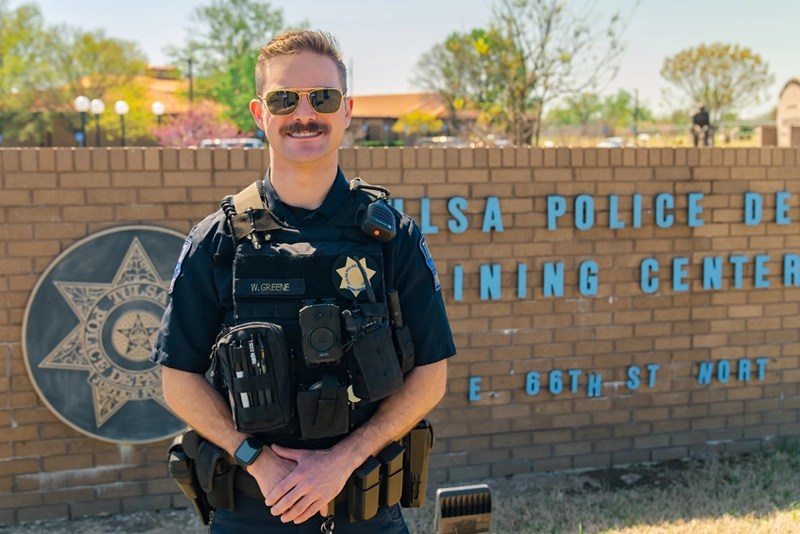
Police officers are often among the first to arrive when someone needs help or a situation needs to be brought under control. Their career might start in patrol, where they respond to calls, make traffic stops, and connect people with services. After a few years, officers may pursue areas like detective work, narcotics, SWAT, or community policing. The job can change from one call to the next, so officers need to think clearly, communicate well, and make good decisions when they have little time.
Hard skills for police officers can include:
- Report writing for law enforcement
- Incident investigation
- Deescalation tactics
- Emergency response
Soft skills for police officers can include:
- Sound judgment
- Communication
- Problem-solving
- Integrity
Police work has a relatively accessible entry path. Many departments accept a high school diploma and provide academy and on-the-job training. 9 Some departments may require or reward college coursework or a degree, while others don’t. For example, the Las Cruces Police Department offers hiring incentives for several degree levels. 10 Those incentives include $20,000 for a bachelor’s degree or four years of honorable military service, $25,000 for a bachelor’s degree in criminal justice, criminology, sociology, or psychology, and $30,000 for a master’s degree in criminal justice or one of those other fields.
- A bachelor’s in criminal justice can deepen your understanding of criminal law, investigations, policing practices, and the justice system. This can give you a stronger foundation for the wide range of calls and decisions you may handle as an officer.
- A master’s in criminal justice can take your knowledge further into research, leadership, and policy. You may learn advanced approaches to crime and public safety that give you preparation for roles with greater responsibility.
Detective
Detectives investigate crimes and may work for agencies like police or sheriff’s departments. A detective might spend their time interviewing witnesses and suspects or reviewing evidence. They follow leads, prepare cases for court, and could even testify as those cases move through the justice system.
Instead of responding to the next call, detectives spend more time on individual cases. And there are plenty of directions that investigation can take. Detectives often specialize in homicide, gangs, financial crimes, cybercrime, or other specialized investigations.
Hard skills for detectives can include:
- Investigative techniques
- Evidence analysis
- Interviewing
- Report writing
Soft skills for detectives can include:
- Attention to detail
- Critical thinking
- Communication
- Sound judgment
For many detectives, the path starts with becoming a police officer and gaining patrol experience. 11 Departments often select experienced officers for detective assignments. So you may spend several years building your skills in the field before moving into investigations. A degree isn’t necessarily required to become a detective, but it can strengthen your qualifications.
- A bachelor’s in criminal justice can give you a foundation in criminal law, investigative techniques, evidence, and the court process.
- A master’s in criminal justice can deepen your ability to analyze crime, with opportunities for advanced study that can be useful in specialized areas such as organized crime, intelligence, or complex investigations.
Federal Agent
Federal agents investigate potential violations of federal law and often work on cases that cross state lines. They might build cases around organized crime, terrorism, cybercrime, or other federal offenses. Federal agents may spend months or years building cases with other agents, analysts, prosecutors, and law enforcement agencies.
You’ll find these careers across the Federal Bureau of Investigation (FBI), Drug Enforcement Administration (DEA), and Bureau of Alcohol, Tobacco, Firearms and Explosives (ATF).
Hard skills for federal agents can include:
- Investigative techniques
- Evidence analysis
- Case documentation
- Knowledge of federal law
Soft skills for federal agents can include:
- Critical thinking
- Communication
- Attention to detail
- Teamwork
A bachelor’s degree is common and, for some federal agent positions, required. For example, the FBI requires at least a bachelor’s degree plus qualifying professional experience for special agents at the entry level. 12 Federal agencies also provide extensive specialized training after you’re hired.
The 100% online bachelor’s degree in criminal justice and online master’s degree in criminal justice at NMSU Global Campus can support you at many points along these law enforcement and investigation career paths. For military and law enforcement professionals, the program offers active-duty tuition discounts, along with flexible scheduling. Students who are preparing for law enforcement careers can explore NMSU’s paid criminal justice internships. Through these opportunities, criminal justice students complete their final credits while earning a salary and gaining hands-on police training.
Private Investigator
Private investigators gather information for individuals, attorneys, businesses, and other clients who need answers to legal or personal questions. Their work might involve interviewing, researching records, conducting surveillance, or documenting evidence.
Investigators handle many types of cases, from background checks and missing persons to workplace theft and insurance fraud. Some work independently, while others work for investigation firms, businesses, or insurance companies.
Hard skills for private investigators can include:
- Research
- Surveillance
- Interviewing
- Evidence documentation
Soft skills for private investigators can include:
- Attention to detail
- Observation
- Problem-solving
- Persistence
Most states require private investigators to be licensed, which typically calls for a high school diploma and several years of related work experience. 13 However, some employers also prefer or require a bachelor’s degree. Law enforcement, military, security, and paralegal work can all provide relevant experience.
- A criminal justice degree can give you a stronger foundation for the work behind an investigation, from interviewing people and evaluating evidence to understanding criminal law and documenting what you find.
The careers above put you close to the action: responding to calls, following leads, building cases, and investigating what happened. But if you’re more interested in the evidence itself — what was left behind and what it can tell you — then there’s another side of criminal justice worth exploring.
Crime Scene Investigator
Crime scene investigators collect, document, and preserve physical evidence at crime scenes. Their work can include photographing and documenting the scene and collecting fingerprints and other evidence. They may also maintain records and prepare reports about what they find.
CSIs often work for police departments or crime laboratories, and their work can become part of an investigation. The role can also be a stepping stone into broader investigative or forensic work.
Hard skills for crime scene investigators can include:
- Evidence collection
- Crime scene photography
- Documentation
- Evidence handling
Soft skills for crime scene investigators can include:
- Attention to detail
- Observation
- Organization
- Report writing
The education required for crime scene work depends on the employer. 14 Some law enforcement agencies hire from within their ranks. Others look to hire civilian candidates with an associate or bachelor’s degree.
- A degree in forensic science, biology, or chemistry can be useful if you’re most interested in the science behind the evidence, such as understanding biological, chemical, or physical traces found at a scene.
- A criminal justice degree might be a good fit if you’re entering CSI work through a law enforcement pathway or are most interested in the investigative context. That includes documenting scenes, preserving evidence, and helping investigators piece together what happened.
Forensic Science Technician
Forensic science technicians analyze evidence that can help investigators understand what happened in a crime. Depending on their specialty, they might work with DNA, drugs, firearms, or fingerprints, for example. Forensic science technicians and crime scene investigators aren’t necessarily the same job. A CSI may primarily collect and document evidence at the scene, while a forensic science technician may spend more time analyzing evidence in a laboratory.
Hard skills for forensic science technicians can include:
- Laboratory skills
- Scientific reasoning
- Statistical analysis
- Evidence handling
Soft skills for forensic science technicians can include:
- Attention to detail
- Technical writing
- Communication
- Problem-solving
Forensic science technicians typically need at least a bachelor’s degree, although the right major depends on the type of forensic work you want to do. 15 Some positions may accept an associate degree. But laboratory-based roles generally require more specialized scientific education.
- A degree in forensic science, biology, chemistry, physical science, or another natural science field can provide coursework and in-person lab work needed to analyze evidence, conduct laboratory testing, and interpret findings using established scientific methods.
At NMSU Global Campus, undergraduate students can add an online Forensic Science minor with different focuses. Students interested in becoming forensic science technicians can explore Laboratory Analysis. Human Forensic Analysis offers a path into forensic anthropology, while Forensic Psychology can complement interests centered on behavior and the law.
Intelligence Analyst
Intelligence analysts examine information to identify threats, patterns, and connections. They can work on issues ranging from terrorism to cybercrime and financial threats. The intelligence reports they produce help agencies decide what to investigate or how to respond.
Analysts bring together information from reports, databases, communications, and other sources. Then they build a clearer picture of a threat or investigation. The work can lead you into different areas of intelligence, including threat analysis and organized crime.
Hard skills for intelligence analysts can include:
- Data analysis
- Research
- Intelligence analysis
- Report writing
Soft skills for intelligence analysts can include:
- Critical thinking
- Attention to detail
- Communication
- Sound judgment
Education requirements depend on the agency and position, but a bachelor’s degree is common for intelligence analyst roles, particularly in federal government. 16 Relevant fields to study can depend on the type of intelligence work you want to do. The FBI, for example, hires intelligence analysts with a range of educational and professional backgrounds and provides extensive training after hiring.
- A criminal justice degree can be a strong fit if you want to analyze criminal intelligence, organized crime, public safety threats, investigations, or other issues connected to the justice system.
- A political science or international relations degree can be useful if you’re more interested in government, geopolitics, national security, or international threats.
- A degree focused on data analytics can make sense if you want to spend more of your time finding patterns in large amounts of information, assessing data, and turning it into useful intelligence.
Those are just some of the directions jobs in criminal justice can take you! The field brings together people with different interests, strengths, and goals. That means you can look for career paths that match the way you like to think, solve problems, work with people, or serve your community.
Hear from a faculty member who’s worked in the field: An NMSU criminal justice professor shares her own journey and what students can expect from New Mexico State University’s online criminal justice programs. 17
Is a Criminal Justice Degree Right for You?
Knowing your options is one thing. Knowing which option feels like a good fit is another. Your interests, experience, and preferred way of working can tell you a lot about where you might like to go in criminal justice.
What kind of work appeals to you?
When you encounter a problem, what do you find yourself wanting to do? Your answer may be a good clue to the kind of criminal justice work you’ll find rewarding.
- Help people through difficult situations.
- Investigate what happened and find answers.
- Analyze evidence, information, or patterns.
- Protect people and address problems.
- Lead programs or improve how systems work.
Once you know what kind of work interests you, there’s another question worth asking: Where would you actually like to spend your days doing it?
Where do you want to do that work?
Two people can work in the same organization or agency and have very different days. Where you spend your time can be just as important as what you do. Think about how you’d like to interact with people, information, and your surroundings.
- In the community, working directly with people.
- In the field, responding and gathering information.
- In a structured legal setting or correctional facility.
- In a lab or evidence-processing environment.
- At a desk, turning information into answers.
- Leading programs, teams, or public services.
The environment you prefer may point you toward certain careers, and away from others. That’s useful information to have as you consider: What can you do with a criminal justice degree? Now that you may have a clearer picture of the work that interests you and where you want to do it, start thinking about what education you might need to get there.
Are you looking for a first career or your next step?
For most jobs in criminal justice, your degree is often just one piece of the preparation you’ll need alongside experience, specialized training, or agency-specific requirements. But your starting point can help determine which degree path makes sense.
If you have a high school diploma or GED, a bachelor’s in criminal justice can be helpful if you want to:
- Qualify for careers that require a four-year degree.
- Build a foundation for jobs in criminal justice.
- Explore different career paths before choosing a direction.
- Gain experience through coursework, projects, or internships.
If you have an associate degree, a bachelor’s in criminal justice can be helpful if you want to:
- Qualify for more positions that require a bachelor’s degree.
- Build on your existing knowledge of criminal justice.
- Enter the criminal justice field from another background.
- Prepare for advancement in your current career or move into a new area.
If you have a bachelor’s degree, a master’s in criminal justice can be helpful if you want to:
- Move into criminal justice from another field.
- Prepare for greater responsibility or roles in leadership, administration, or policy.
- Develop deeper expertise in a specific area.
- Pursue academic and research careers or future doctoral study.
And if you’re already balancing work, family, or other responsibilities, the way you earn your degree matters, too. A flexible online criminal justice degree can let you build toward that next step without putting everything else on pause.
FAQs: Criminal Justice Careers
What are the different criminal justice career paths?
Criminal justice careers span far more than law enforcement. They include investigation, courts, corrections, rehabilitation, forensics, intelligence, victim advocacy, public safety, security, and compliance.
What are some of the highest-paying jobs for criminal justice?
Some of the highest-paying jobs you can get with a criminal justice degree require significant experience. You may also need specialized training.
These are average salaries as of 2026 for some of the highest-paying criminal justice degree jobs:
- Special Agents: $115,569 per year 18
- Detectives: $100,840 per year 19
- Emergency Management Directors: $98,231 per year 20
- Senior Fraud Investigators: $84,338 per year 21
What types of criminal justice degrees are there?
The most common are a criminal justice associate degree, a bachelor’s in criminal justice, and a master’s in criminal justice. Doctoral degrees available for students pursuing advanced research or academic careers. You can also prepare for criminal justice careers through degrees such as forensic science, psychology, or social work. Which degree depends on the kind of work you want to do.
Is a criminal justice master’s degree useful for career advancement?
Yes, a master’s degree in criminal justice can help professionals build expertise for certain advanced roles. A master’s can also prepare you for leadership and further study. Its value depends on your career goal. Some criminal justice positions prioritize experience, specialized training, or agency requirements over a graduate degree.
Pursue Your Criminal Justice Career Path with an Online Degree
You’ve seen the possibilities a criminal justice career can offer. Now you can explore the educational paths. The 100% online Bachelor of Criminal Justice and Master of Criminal Justice at NMSU Global Campus offer flexible, affordable ways to pursue your education while balancing responsibilities like a career and family.
NMSU’s Department of Criminal Justice has been preparing students for careers in the field since 1962. That makes it one of the oldest criminal justice programs in the nation. NMSU Global Campus students have access to faculty expertise, applied learning, and connections to agencies across the field.
Whether you’re starting out, advancing in your current career, or moving into a new area, our online criminal justice degree programs welcome students from a wide range of educational and professional backgrounds.
If you’re ready to see how one of these programs could fit your goals, talk with someone at NMSU Global Campus about your options.
Find Your Place at NMSU Global Campus
Ready to turn a career direction into a plan? Begin by applying anytime to the online Bachelor of Criminal Justice or Master of Criminal Justice programs at NMSU Global Campus. Admission is rolling, with opportunities to start 8-week mini-semester classes year-round.
References
1. “Occupational Outlook Handbook: Social and Human Service Assistants.” U.S. Bureau of Labor Statistics, last updated 27 August 2026.
2. “Which Majors Work Best with an Online Minor in Human Rights?” NMSU Global Campus Blog, 21 July 2025.
3. “Occupational Outlook Handbook: Social and Community Service Managers.” U.S. Bureau of Labor Statistics, last updated 27 August 2026.
4. “Occupational Outlook Handbook: Probation Officers and Correctional Treatment Specialists.” U.S. Bureau of Labor Statistics, last updated 27 August 2026.
5. “Occupational Outlook Handbook: Probation Officers and Correctional Treatment Specialists.” U.S. Bureau of Labor Statistics, last updated 27 August 2026.
6. “Occupational Outlook Handbook: Police and Detectives.” U.S. Bureau of Labor Statistics, last updated 27 August 2026.
7. “Occupational Outlook Handbook: Emergency Management Directors.” U.S. Bureau of Labor Statistics, last updated 27 August 2026.
8. “Occupational Outlook Handbook: Security Guards and Gambling Surveillance Officers.” U.S. Bureau of Labor Statistics, last updated 27 August 2026.
9. “Occupational Outlook Handbook: Police and Detectives.” U.S. Bureau of Labor Statistics, last updated 27 August 2026.
10. “Las Cruces Police Department Recruiting.” City of Las Cruces, accessed 17 September 2026.
11. “Occupational Outlook Handbook: Police and Detectives.” U.S. Bureau of Labor Statistics, last updated 27 August 2026.
12. “Occupational Outlook Handbook: Police and Detectives.” U.S. Bureau of Labor Statistics, last updated 27 August 2026.
13. “Occupational Outlook Handbook: Private Detectives and Investigators.” U.S. Bureau of Labor Statistics, last updated 27 August 2026.
14. “Occupational Outlook Handbook: Forensic Science Technicians.” U.S. Bureau of Labor Statistics, last updated 27 August 2026.
15. “Occupational Outlook Handbook: Forensic Science Technicians.” U.S. Bureau of Labor Statistics, last updated 27 August 2026.
16. “Intelligence Careers at the FBI: Intelligence Analysts.” U.S. Department of Justice, accessed 22 September 2026.
17. “An NMSU Criminal Justice Professor Shares Her Real-World Perspective.” NMSU Global Campus Blog, 2 April 2026.
18. “Special Agent Salary in United States.” Indeed.com, updated 13 September 2026.
19. “Detective Salary in United States.” Indeed.com, updated 13 September 2026.
20. “Emergency Management Director Salary in United States.” Indeed.com, updated 13 September 2026.
21. “Senior Fraud Investigator Salary in United States.” Indeed.com, updated 14 September 2026.
About New Mexico State University Global Campus
At NMSU Global Campus, our mission is to help prepare the next generation of leaders. We focus on offering high-quality education that spans a multitude of disciplines and career pathways. Whether you’re seeking a degree or certification in teaching, science, engineering, healthcare, business, or others, we provide exciting opportunities that can help shape your future.
New Mexico State University is accredited by the Higher Learning Commission, an institutional accreditation agency recognized by the U.S. Department of Education. Specialized accreditation from other accrediting agencies is also granted for some programs. We offer flexible, career-focused 100% online courses and degree options in New Mexico, across the nation, and around the globe. Start your journey with our accessible and affordable degree options.
Get Your Personalized Program Info
Recent Criminal Justice Posts

Which Majors Work Best with an Online Minor in Human Rights?
Political science and law are common choices for students interested in supporting human rights — but they’re far from the...
Read More about Which Majors Work Best with an Online Minor in Human Rights?