8 Most In-Demand General Skills Employers Want in 2026
As AI technology changes the world of work, the skills that drive career growth are shifting. Employers now prioritize candidates who can think critically, communicate clearly, and make sound decisions in complex, fast-changing environments.
Work is changing in ways that are becoming harder to overlook. Artificial intelligence, automation, and other digital technologies are reshaping how work gets done and what employers prioritize. In fact, 86% of employers expect AI and information-processing technologies to transform their business by 2030. 1
The shift goes beyond job titles. It is redefining what employers look for in the people they hire and promote. Technical knowledge still matters, but it is no longer enough on its own. Employers are paying closer attention to how people think, communicate, adapt, and contribute when the work becomes less predictable.
Whether you are preparing for your first role, advancing your career, or stepping into leadership, the most in-demand general skills shape how effectively you can apply what you know. These are the skills employers are prioritizing in 2026 and beyond.
At NMSU Global Campus, that connection between learning and career readiness is central to the student experience. Programs are designed not only to develop knowledge in a chosen field, but also to strengthen the professional skills employers consistently expect.
Explore 90+ Online Degree Programs at NMSU Global Campus

Why Employers Value General Skills in the Age of AI
Artificial intelligence is not replacing entire jobs as quickly as headlines suggest. Instead, it is reshaping how work gets done within those jobs.
Recent analysis shows that about 36% of occupations already use AI for at least one-quarter of their tasks, with the highest AI adoption in areas like software development, research, and technical writing. 2 More importantly, the same data shows that AI is used more often to augment work rather than fully automate it. That means professionals are still needed to interpret results, refine outputs, and make final decisions.
Expectations are changing in response. As AI handles more of the drafting, summarizing, and initial analysis, the value of human contribution moves upstream. Employers are no longer focused only on whether someone can produce work. They are focused on whether someone can evaluate, challenge, and improve it.
That shift is already showing up in hiring data. PwC’s 2025 Global AI Jobs Barometer found that occupations most exposed to AI have experienced a 55% faster change in the skills employers request compared to less-exposed roles. 3 The emphasis is moving toward skills that support judgment and coordination. These include critical thinking, communication, adaptability, and collaboration.
In practice, this means the most valuable professionals are not those who rely on tools, but those who know how to direct them. They can interpret context, ask better questions, and connect outputs to real business or organizational needs.
That is why general skills matter more now, not less. As work becomes more technology-enabled, the ability to think clearly, communicate effectively, and make sound decisions is what allows professionals to stay relevant and continue growing, even as the tools around them change.
8 Most In-Demand General Skills Employers Value Today
As hiring becomes more skills-based, employers are putting more weight on transferable abilities that carry across industries and roles. The National Association of Colleges and Employers (NACE) reports that almost two-thirds of employers used skills-based hiring in its Job Outlook 2025 Spring Update. 4
That combination helps explain why broad, portable skills matter so much right now: they are easier to apply across changing tools, teams, and responsibilities.
What follows are the general skills that show up most consistently in employer expectations today and continue to hold their value over time.
1. Critical Thinking and Problem-Solving
When the answer is not obvious, this is the skill employers rely on most.
Nearly 90% of employers look for evidence of problem-solving on resumes, and the World Economic Forum (PDF) still ranks analytical thinking as the top core skill employers consider essential. 5, 6 Employers are not only hiring for task completion. They are hiring for judgment, especially in situations where the answer is not obvious. That includes weighing tradeoffs, interpreting incomplete information, and deciding what to do next when conditions are unclear.
In practice, this shows up everywhere. A business professional may need to make sense of conflicting data. A healthcare provider may need to respond to an unexpected patient outcome. An engineer may need to adjust a design under new constraints.
Degree programs that emphasize applied learning tend to build this skill most effectively. This is particularly true for those that require students to work through real scenarios, such as:
- Master of Business Administration (MBA) for decision-making across functions
- Master of Data Analytics for interpreting and applying complex information
- Master of Public Health (MPH) for evaluating real-world health challenges
- Engineering programs for solving technical problems under constraints
Across these fields, the goal is the same: to move beyond memorization and build the kind of thinking employers rely on.
2. Communication
Communication remains one of the clearest differentiators in the workplace because it determines whether ideas actually move work forward. The value is not in sounding polished, but in making information usable. It also means helping others understand what matters, what to do next, and why it matters.
This applies across formats. Writing, presentations, and everyday conversations all shape how effectively someone contributes.
Learners typically build this skill through structured opportunities to express and refine their thinking, especially in programs, such as:
- Master of Arts in Communication Studies, where ideas are shaped for different audiences
- Master of Arts in English: Technical and Professional Communication, focused on clarity in complex messaging
- Business and management programs, where presentations and reporting are central to decision-making
- Education programs, where clear instruction and stakeholder communication are part of daily practice
Over time, communication becomes less about delivery and more about clarity, alignment, and influence.
3. Collaboration and Teamwork
Most of today’s work now happens across functions rather than within them.
That means success often depends on how well someone works with others, not just how well they perform individually. Collaboration is less about participation and more about contribution. It involves listening well, clarifying expectations, and helping a group move toward a shared outcome.
This becomes especially important in environments where multiple perspectives are involved.
Students often develop this skill in settings where coordination is required to succeed, including:
- Bachelor of Business Administration (BBA) programs with team-based projects and shared outcomes
- Master of Criminal Justice, where decisions involve coordination across systems and stakeholders
- Master of Social Work (MSW), centered on collaborative, client-focused environments
- Engineering programs, where design and problem-solving depend on group input and iteration
These experiences reflect the reality of the modern workplace, where progress depends on how well people work together.
4. Adaptability and Continuous Learning
Career paths are less fixed than they once were. Roles change. Tools evolve. Expectations shift. Employers increasingly value people who can stay effective through those changes without losing momentum.
Adaptability is not just about reacting to change. It is about continuing to learn, adjusting quickly, and applying new knowledge in real time.
Learning environments that require independence and flexibility tend to reinforce this skill, particularly:
- Fully online programs, where self-direction and time management are essential
- Graduate programs that balance theory with evolving industry practices
- Fields like business, IT, and healthcare, where tools and standards shift frequently
In these learning environments, students are not just absorbing content. They are learning how to keep learning in a fast-moving world.
5. Digital Fluency and AI Literacy
Digital fluency has become a baseline expectation across most industries. This does not mean every professional needs advanced technical expertise. However, it’s critical to understand how technology shapes workflows, communication, and decision-making today. Increasingly, it also means knowing how to work with AI tools.
As AI takes on more routine tasks, professionals are expected to interpret outputs, ask better questions, and apply results in context.
Students can build that key digital foundation in degree programs that integrate technology into everyday learning, including:
- Master of Information Technology and MBA in Information Systems, focused on systems, infrastructure, and digital environments
- Master of Data Analytics, where data informs decisions and strategy
- BBA in Information Systems, connecting business needs with technical tools
- Bachelor of Information and Communication Technology (ICT), emphasizing applied digital skills
These programs help students become comfortable functioning in technology-driven environments, not just aware of tech trends.
6. Leadership and Initiative
Leadership now shows up well before formal job titles. Employers consistently look for people who take ownership, move work forward, and help others stay aligned, even without a title. In many cases, leadership shows up in a person’s initiative.
This matters because organizations rely on individuals who can operate with some level of independence. Waiting for direction slows progress. Taking responsibility keeps it moving.
Students often build this through experiences that require accountability and follow-through, particularly in:
- MBA and business programs focused on strategy and decision-making
- Educational leadership and administration programs, focused on guiding teams and systems
- Healthcare leadership and nursing programs, where coordination and responsibility are critical
- Project-based coursework across disciplines, where ownership directly affects outcomes
Over time, initiative becomes one of the clearest signals of your leadership potential.
7. Creativity and Innovation
Employers are not only focused on efficiency. They are also trying to improve how work gets done. That requires people who can rethink existing approaches, identify better options, and generate ideas that move work forward. Creativity in this context is applied. It shows up in how problems are framed and how solutions are developed.
This skill becomes especially valuable when established methods stop working or when organizations need to respond to new challenges.
Students develop this kind of thinking in degree programs that encourage open-ended problem-solving, including:
- Marketing and business programs, where strategy depends on positioning and new ideas
- Engineering programs, where design requires iteration and constraint-based thinking
- Educator preparation programs, where learning must adapt to different needs and contexts
- Applied studies, where ideas are applied across multiple fields
In professional settings, creativity is less about originality alone and more about usefulness.
8. Emotional Intelligence and Active Listening
As work becomes more collaborative, interpersonal awareness carries more weight.
Emotional intelligence shows up in how people handle conversations, respond to feedback, and navigate complex interpersonal situations with colleagues. Active listening plays a central role because it allows professionals to understand what others actually need, not just what is being said.
This has a direct impact on teamwork, leadership, and trust.
Students often build this skill in learning environments where communication carries weight, particularly in degree programs such as:
- Master of Social Work (MSW), where understanding people is central to the role
- Master of Public Health (MPH), where communication affects outcomes at a community level
- Counseling and psychology programs, focused on interpersonal awareness and response
- Educator preparation programs and communication-focused degrees, where listening skills improveshapes effectiveness
These fields require thoughtful interaction, which translates directly into professional effectiveness.
How General Skills Improve Employability and Career Growth
Employers are not just adjusting what they hire for. They are also changing how they evaluate long-term potential.
Recent research helps explain why. A large-scale analysis from the Harvard Business Review found that workers with strong foundational skills tend to earn higher wages and move into more advanced roles. 7 They are also more likely to remain resilient as industries change.
That finding matters because it changes how these general skills — or “soft skills” — should be understood. They are not just useful early in a career or helpful in a job search. Soft skills influence how quickly someone can learn new things, adapt when technology changes, and grow into more complex responsibilities over time.
At the same time, hiring is becoming more skills-based. Employers are placing less emphasis on degrees alone and more on what candidates can demonstrate in practice. That makes adaptability, communication, and critical thinking more than desirable traits. They often shape whether someone can take on broader responsibilities or remain limited to a narrower scope.
That distinction tends to show up quickly in the workplace. Professionals with strong general skills are often better positioned to do the following:
- Take on broader responsibilities earlier
- Move more easily across teams or functions
- Contribute in ambiguous situations where direction is limited
- Build trust faster with managers and peers
Over time, those patterns compound. Roles expand. Opportunities widen. Career paths become less linear and more flexible.
This is where education can play a more strategic role. Degree programs that combine field-specific knowledge with applied, real-world work tend to reinforce these skills consistently, not just introduce them once. Through project-based coursework, collaboration, and scenario-driven assignments, students are asked to think, communicate, and adapt in ways that reflect actual workplace expectations.
That kind of preparation does not just make someone job-ready. It makes them more resilient as roles change and more capable of growing with them.
In a labor market shaped by AI, automation, and evolving job structures, that distinction matters. Technical skills may help open the door, but general skills are often what help professionals move forward once they are inside organizations.
Build Career-Ready Skills at NMSU Global Campus
At NMSU Global Campus, career readiness is built directly into how programs are designed.
Students build knowledge in their field while also strengthening the broader capabilities employers want to see in real workplace settings. Through applied assignments, collaborative coursework, and flexible online learning, they gain experience using judgment, communicating clearly, and managing responsibilities in ways that translate beyond the classroom.
That matters because employers are not only looking for what candidates have studied. They are looking for how those candidates will perform, adapt, and grow once they are on the job.
Explore 90+ fully online programs at NMSU Global Campus to build the knowledge and professional skills that align with how employers evaluate talent today.
References
1. “The Future of Jobs Report 2025.” World Economic Forum, 7 January 2025.
2. “The Anthropic Economic Index.” Anthropic, 10 February 2025.
3. “The Fearless Future: 2025 Global AI Jobs Barometer.” PwC Global, 3 June 2025.
4. Gray, K. “Almost Two-thirds of Employers Use Skills-Based Hiring to Help Identify Job Candidates.” National Association of Colleges and Employers, 19 May 2025.
5. Gray, K. “What Are Employers Looking for When Reviewing College Students’ Resumes?” National Association of Colleges and Employers, 9 December 2024.
6. “The Future of Jobs Report 2025.” World Economic Forum, page 6, January 2025.
7. Hosseinioun, M., Neffke, F., Young, H., Zhang, L. “Soft Skills Matter Now More Than Ever, According to New Research.” Harvard Business Review, 26 August 2025.
About New Mexico State University Global Campus
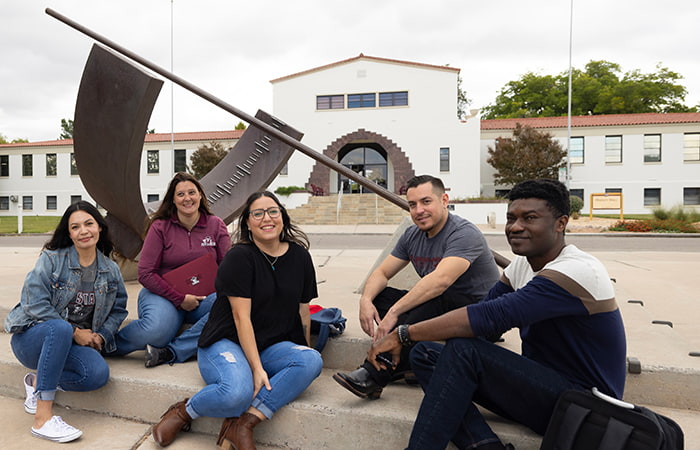
At NMSU Global Campus, our mission is to help prepare the next generation of leaders. We focus on offering high-quality education that spans a multitude of disciplines and career pathways. Whether you’re seeking a degree or certification in teaching, science, engineering, healthcare, business, or others, we provide exciting opportunities that can help shape your future.
New Mexico State University is accredited by the Higher Learning Commission, an institutional accreditation agency recognized by the U.S. Department of Education. Specialized accreditation from other accrediting agencies is also granted for some programs. We offer flexible, career-focused 100% online courses and degree options in New Mexico, across the nation, and around the globe. Start your journey with our accessible and affordable degree options.
Get Your Personalized Program Info
Recent General Posts

Starting College Online After High School
Not every high school graduate takes the same route into college. With online college options, there are more flexible pathways...
Read More about Starting College Online After High School
Online Degrees for Military and Veterans: What to Know Before You Apply
Military service builds discipline, leadership, and technical skills, but turning that experience into a civilian-ready credential can take a deliberate...
Read More about Online Degrees for Military and Veterans: What to Know Before You Apply
How Long Does it Take to Finish an Online Degree?
This guide breaks down how fast you can finish an online bachelor’s or master’s degree. Explore the practical factors that...
Read More about How Long Does it Take to Finish an Online Degree?